
Best Heel Blister Patches for Marathon Training (2026)
For heel blister prevention during marathon training, we rank three patches: SUPERBAND On-The-Go (our own pre-cut hydrocolloid), Compeed Sports Heel and ENGO heel patches. Each is scored on four criteria: it works on the skin before and after a blister forms, it holds for several days through sweat and showers, it fits the heel zone that rubs, and it travels in a race belt. On-The-Go and Compeed finish close (Compeed wins on heel-shaped cushioning), ENGO suits a back-of-heel rub caused by one specific shoe, and paper tape on known hot spots has the strongest trial evidence of anything here.
We make SUPERBAND, so read this ranking knowing who wrote it. We have laid out every criterion and named where a competitor beats us, so you can check each placement yourself.
Heels earn their own article. In the Pre-TAPED II trial of 128 multistage ultramarathon runners, 27 of 117 blisters (23%) formed on the heel, second only to the toes at 50%, and 80% of all blisters appeared by the end of stage 2 (Lipman et al., Clinical Journal of Sport Medicine, 2016). Those were desert ultras, so the exact shares won't transfer to a road marathon. The pattern still matters for training: heel trouble tends to show up early, and a plan for it belongs in your kit before the long runs get long.
How we ranked the patches
We weighted four criteria, in this order:
- Skin-side use before and after a blister. Can it go on a hot spot before your run and also cover a blister that has already formed? Marathon training produces both situations.
- Multi-day hold through sweat and showers. Does the manufacturer direct you to leave it on until it loosens? Every removal is another pull on the same heel skin (more on that below).
- Heel fit. Is it shaped for the curve at the back of the heel, or does it rely on a general shape?
- Race-belt portability. How many patches come in a pack, and can you apply one mid-run without scissors?
We did not run a head-to-head trial of these products. The table reflects each maker's published directions and specs, and the evidence column says plainly what has and has not been studied.
| Criterion | SUPERBAND On-The-Go | Compeed Sports Heel | ENGO heel patch |
|---|---|---|---|
| Where it sticks | Skin | Skin | Inside the shoe |
| Covers a formed blister | Yes, per label | Yes, per label | No |
| Wear time per maker | Multiple days, until it loosens | Several days; Compeed UK says up to 7 for its blister plasters | Up to 300+ miles per seller |
| Heel-specific shape | No (oval, 2.2 x 1.4 in) | Yes (heel shape, extra cushioning) | Yes (back-of-heel version, 1.75 x 3.75 in) |
| Pack size | 10 | 5 | 2 |
| Product-specific prevention trial | None | None found | None found |
Which part of your heel is rubbing?
"Blisters form from friction, heat and moisture, all of which are common when running," board-certified dermatologist Asmi Berry, DO, FAAD, told Nike. Where that friction lands on the heel changes which product makes sense.
Back of the heel (the Achilles rim). The shoe's heel counter or collar rubs the same spot on every stride. If the hot spot appears in only one pair of shoes, the shoe is the likely cause, and a shoe-side fix like ENGO is worth trying first.
Sides and bottom of the heel. Shear here comes from the foot moving against the sock and insole. A skin-side patch over the known hot spot is the more direct option.
Our zone map for long-run blisters and chafing covers the rest of the foot and body.
1. SUPERBAND On-The-Go: the race-belt pick
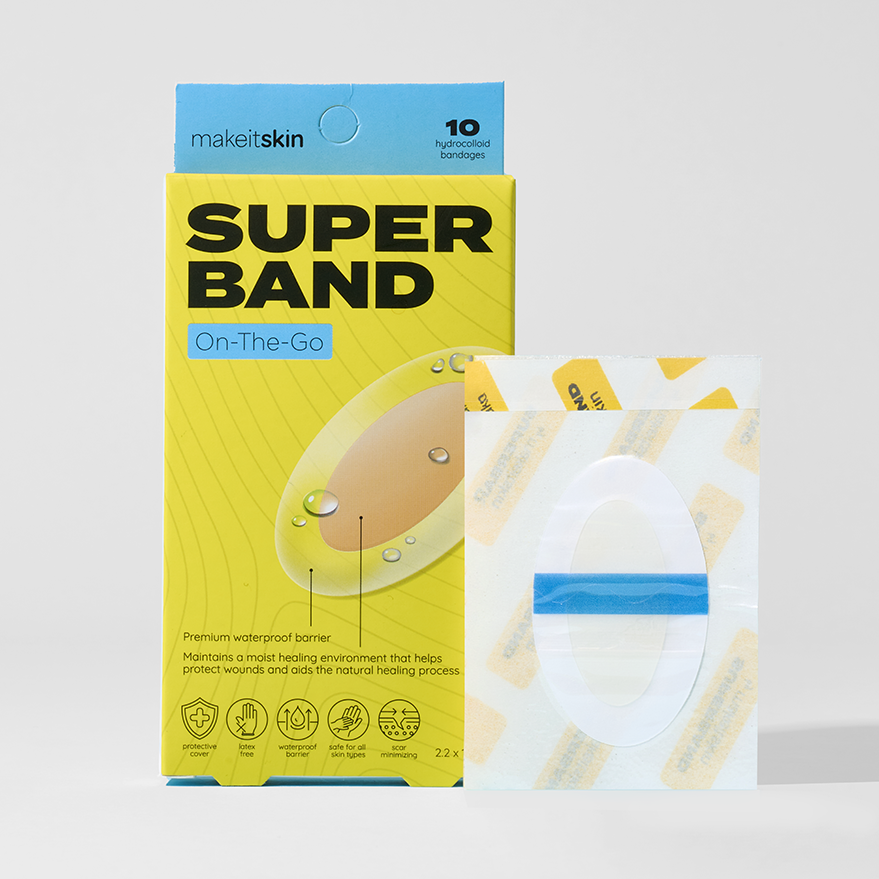
Pre-cut hydrocolloid with a polyurethane film, 10 sterile patches per box at 2.2 x 1.4 inches, $15 (MAKEITSKIN). Our product page describes it as latex-free and waterproof through heavy sweat, showers and swimming, and our Amazon listing directs you to apply it to clean, dry skin and wear it for multiple days until it loosens or absorbs fully.
Why it ranks first on our criteria: it covers both the pre-run hot spot and an already formed blister, the label supports multi-day wear, and ten patches in a pack go further across a training block than five. No scissors are needed, which is what you want at a mile-14 aid station.
Where it falls short: the oval shape is general-purpose, so it won't cup the Achilles rim the way a heel-shaped plaster does, and it carries no cushioning claim to match Compeed's. Adhesion depends on clean, dry skin free of lotion, which is hard to manage mid-run on a sweaty foot. There is no randomized trial of SUPERBAND for blister prevention. Individual tolerance still varies even with a latex-free label, so stop using it if your skin reacts.
2. Compeed Sports Heel: the best heel-shaped cushion
Compeed's Sports Heel plaster uses its hydrocolloid gel in a honeycomb structure that the company says gives 20% extra cushioning compared with its medium Blister Plasters, with tapered edges and a waterproof film (Compeed). Compeed says its blister plasters stay in place for up to 7 days, with individual experience varying (Compeed UK), and it describes the Sports Heel cushioning as helping prevent painful rubbing as well as protecting a blister.
Why it's a close second: on heel fit and cushioning, it beats our On-The-Go outright. If your problem is a deep, painful rub at the back of the heel, this is the more heel-specific product.
Where it falls short on our criteria: five plasters per pack (Amazon listing), and the label says never to cut a Compeed plaster (label warnings via The French Pharmacy), so you can't trim it for an odd-shaped spot. Like ours, it needs clean, dry skin free of creams and oils.
3. ENGO heel patches: fix the shoe instead of the skin
ENGO patches stick to your footwear, insoles or orthotics. They work at the shoe, not the skin (Blister Prevention). The low-friction surface reduces the shoe-to-sock coefficient of friction in wet and dry conditions, so the sock can stay put against your skin instead of sliding over it (Blister Prevention). The back-of-heel version comes as two 1.75 x 3.75 inch patches shaped to the heel (Performance Running).
Why it ranks third on our criteria: nothing touches your skin, the seller lists it as lasting 300+ miles per patch, and it is the most direct fix when one shoe rubs one spot. It ranks below the skin patches because it can't cover a blister that has already formed and it has to be placed inside each pair you rotate. The seller also notes it may not adhere to shoes with internal waterproofing.
Paper tape: the evidence baseline
Paper tape sits outside the patch ranking because it is tape. Its trial evidence is still stronger than anything above. In Pre-TAPED II, paper tape applied to each runner's blister-prone areas cut blisters by 40% (95% CI 28-52) compared with untaped areas of the same foot (Lipman et al., 2016). Placement mattered: the same team's earlier trial, which taped most common blister-prone areas of one foot, found no benefit (full text via RacingThePlanet). The authors also pointed out that paper tape's weak adhesive lowers the chance of tearing the roof off a blister when you remove it (MinnPost).
The practical takeaway is to tape only the spot your training history points to. Our marathon blister guide to patches and tape walks through the taping method.
How often should a heel patch come off?
Medical adhesive-related skin injury (MARSI) covers skin stripping, blistering, skin tears, and irritant or allergic contact dermatitis from adhesive products (Wounds International). A heel you run on five days a week takes that adhesive load repeatedly. A patch you peel off after every run means five or more removals a week on the same patch of skin. A hydrocolloid you leave until it loosens might mean one or two.
That is our reasoning from the MARSI definition. No study has tested it in runners, and long wear has its own trade-off: skin under any covering for days needs checking. Two habits help whatever you choose. Leave a hydrocolloid until its edges start to lift, then remove it slowly by stretching it along the skin rather than pulling it upward, as Compeed's directions describe. If your skin is reactive or eczema-prone, our guide to low-irritation blister patches for sensitive skin goes deeper on adhesive trade-offs.
Heel shapes a pre-cut patch misses
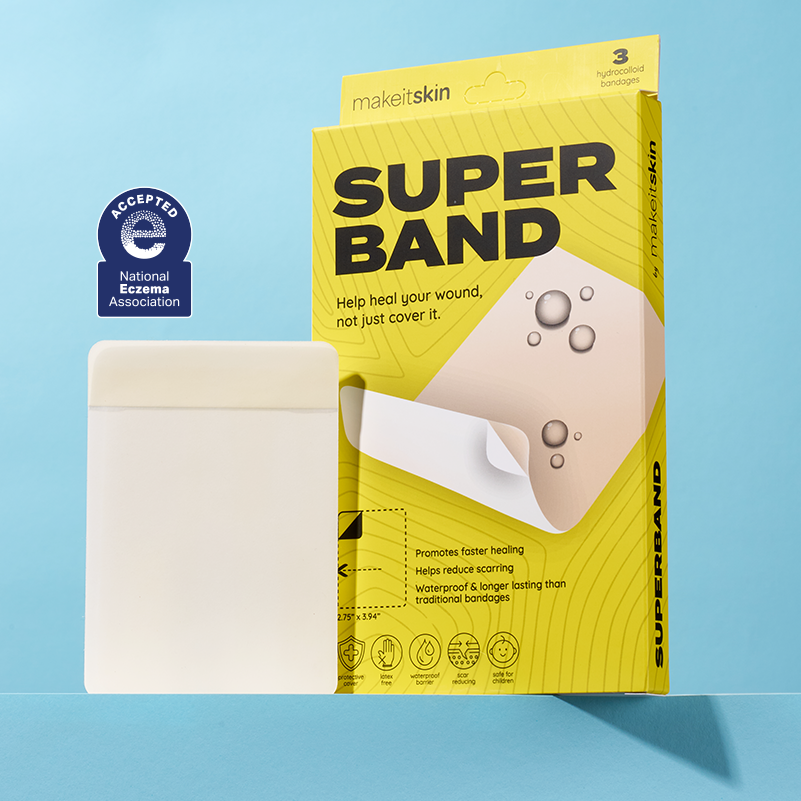
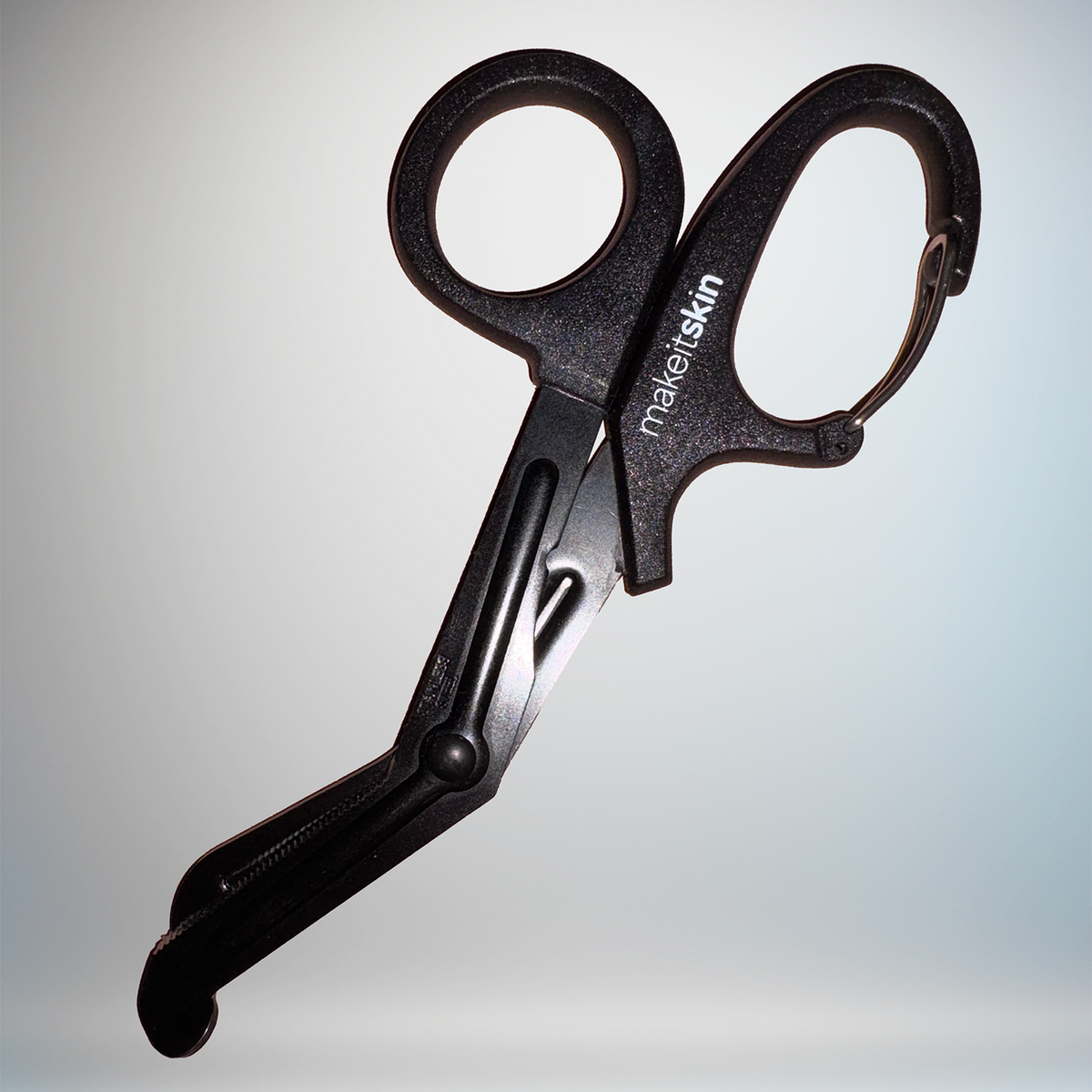
Some heels don't suit an oval or a fixed heel shape: a hot spot that wraps around the Achilles rim, or a long strip along the side of the heel. For those, we make SUPERBAND Cut-To-Size, a flat hydrocolloid sheet ($20) you trim at home before the run. Cut a piece that covers the whole area with at least one centimeter of healthy skin beyond the edge on every side (MAKEITSKIN how-to guide). Precision Carabiner Shears ($10) clip to a bag, and the Cut-To-Size Starter Kit ($25) pairs a sheet with shears.
Prepping at home suits a planned long run. On-The-Go stays the race-belt option because you can't trim a sheet mid-run.
SUPERBAND On-The-Go
15.00 USD
Shop now
SUPERBAND Cut-To-Size
20.00 USD
Shop now
Precision Carabiner Shears
10.00 USD
Shop now
Patches sit on top of the basics
A patch only covers a spot. The American Academy of Dermatology's friction-blister advice, summarized by Cleveland Clinic, starts with well-fitting shoes, avoiding cotton socks that soak up sweat, and powder or petroleum jelly on friction areas. Board-certified dermatologist Amy Huang, MD, recommends protecting known blister spots before a long session by applying blister plasters at hot spots (Peloton). Use petroleum jelly and an adhesive patch on separate spots, since our label asks for skin free of ointments and lotions.
See a clinician if a heel blister is very large, shows signs of infection, or keeps returning despite these changes. Compeed's label also advises people with diabetes to consult a doctor before use (The French Pharmacy).
FAQ
Should I try a new patch for the first time on race day?
No. Trial it on long runs first. Insole maker Sidas puts "banish the new" first on their race-day list and warns against covering the feet in several hydrocolloid dressings from the start (Sidas). Patch the one or two spots your training has already flagged.
Should I pop a heel blister before covering it?
Usually not. The AAD says you can drain a blister when it is very large and painful, and to keep it clean if you do, because draining raises infection risk (Cleveland Clinic). An intact roof is the skin's own cover.
Can I use an ENGO patch in the shoe and a hydrocolloid on the skin at the same spot?
The mechanisms don't conflict: ENGO lowers friction between shoe and sock, and a skin patch covers the skin itself. We haven't seen a study of the combination, so try it on a training run before relying on it.
What does the white bubble under a hydrocolloid mean?
Compeed explains that a white bubble forming within 24 hours is the plaster absorbing excess fluid, and that it adds cushioning (Compeed on Amazon). Spreading redness, warmth or pus around the patch is different and needs a clinician.
If you want a patch that lives in your race belt, SUPERBAND On-The-Go is $15 for ten. Test one on your next long run before you trust it on race day.


