
Best Portable Wound Care for Hiking: 4 Dressings Compared
For hiking and outdoor activity, the most versatile portable wound care is a pre-cut hydrocolloid patch, because it covers a cleaned scrape, small cut or opened blister and goes on without scissors. We compare four dressings (SUPERBAND On-The-Go, BAND-AID HYDRO SEAL, Compeed Blister Plasters and Nexcare Advanced Healing Waterproof) on injury range, water and sweat hold, trailside ease, wear time and size. A cushioned blister plaster is the add-on for heel-prone boots, and a light film-and-gel-pad bandage is a simple backup.
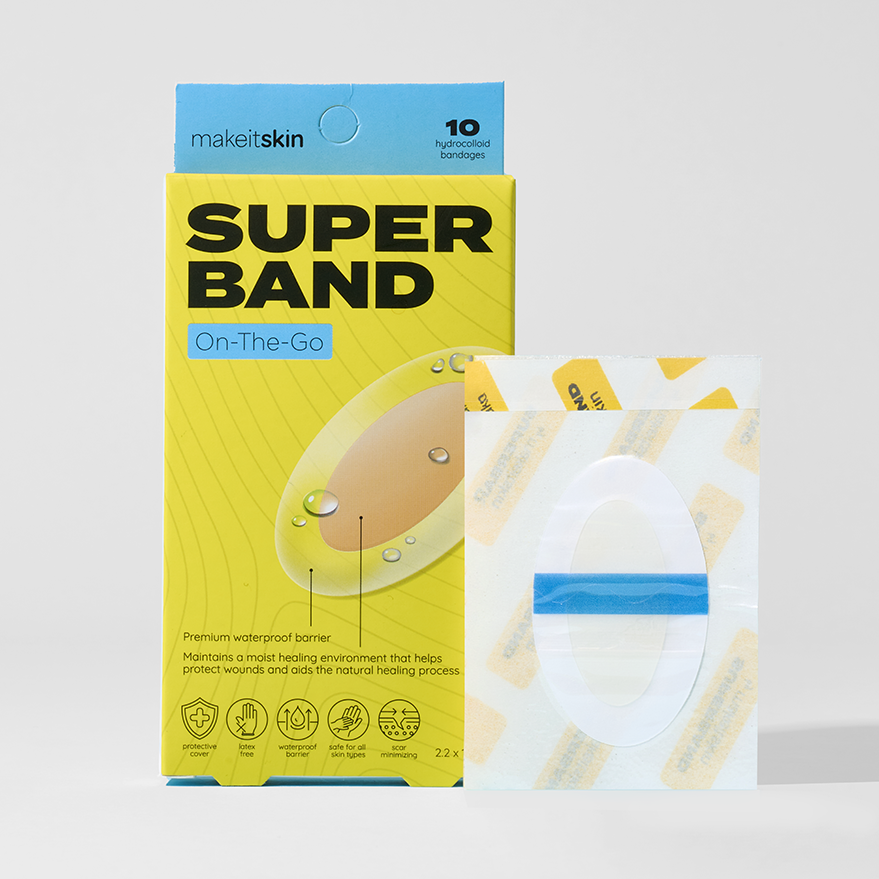
We make SUPERBAND hydrocolloid bandages, so one of the four is ours, and we say where the others do a job better. Outdoors, the dressing has a harder life than at home. You are far from a sink, your hands are dusty, you sweat through the afternoon, and whatever you put on at the trailhead has to hold through a creek crossing and a pack strap until camp.
This article answers one narrow question: which dressing to carry. For the rest of the pouch (water for cleaning, tweezers, tape, gauze), see our hiking and outdoor wound kit list.
How we compared the four dressings
Each dressing was judged on its maker's published product information, using five reader questions:
- Injury range. Does it cover scrapes, small cuts and blisters, or one of those?
- Water and sweat hold. What does the maker claim about showers, swimming or sweaty skin?
- Trailside ease. Can you apply it with no scissors and limited light?
- Wear time. How long does the maker say it can stay on?
- Size per piece. How much skin does one piece cover?
Water and wear claims below are the manufacturers' own claims, and adhesion varies with skin, sweat and body site.
The four dressings at a glance
| Dressing | Construction | Maker's water and sweat claim | Wear guidance | Size per piece | Best trail role |
|---|---|---|---|---|---|
| SUPERBAND On-The-Go (ours) | Pre-cut hydrocolloid on polyurethane film | Waterproof through heavy sweat, showers and swimming | Multiple days, until it loosens or absorbs fully | 2.2 x 1.4 in, 10 per box | Main dressing for scrapes, small cuts and opened blisters |
| BAND-AID HYDRO SEAL | Pre-cut hydrocolloid | Waterproof; stays on through hand washing and showers | Multiday | All Purpose 0.78 x 2.3 in (10 per box); Heels 1.1 x 2.1 in (6 per box) | Same category; heel-specific shape |
| Compeed Blister Plasters | Cushioned hydrocolloid blister plaster with tapered edges | Water-resistant and breathable (Extreme) | Up to 7 days; individual experience varies | Varies by product | Foot and heel blisters |
| Nexcare Advanced Healing Waterproof | Clear film with a gel pad, diamond shape | Stays on in bath, shower or pool; adheres to damp or sweaty skin | Follow package directions | Assorted, 3 sizes | Light backup for small cuts |
Why a pre-cut hydrocolloid patch is our first pick
A hydrocolloid patch absorbs wound fluid into a gel and keeps the wound surface moist and covered. Compeed describes its hydrocolloid technology as an active gel with moisture-absorbing particles. Our On-The-Go directions describe the same job: maintaining a moist environment so scabs do not get in the way.
On a trail, that matters for two practical reasons. One patch type covers a shin scrape, a small cut or a heel blister that has torn open. And a pre-cut patch goes on in seconds with no scissors and no flat surface to cut on.
There is outdoor evidence for the approach, though it is limited. A 2019 case report in Wilderness & Environmental Medicine by Subarna Adhikari, Suvash Dawadi and Jenisha Upadhyay describes a climber whose harness caused a friction blister. It was managed with a hydrocolloid dressing; when the blister ruptured three days later the dressing was still in place, and after a week the wound was healing and the climber resumed climbing with a new dressing on. That is a single patient case, and the authors note that existing blister guidelines cover the feet and are inconsistent between authors.
Hydrocolloid has limits. It is meant for minor wounds and blisters, a patch only holds if it goes onto clean, dry skin, and individual skin tolerance to adhesives differs.
SUPERBAND On-The-Go: our pick for the trail pouch
SUPERBAND On-The-Go is our pre-cut hydrocolloid patch. Each box holds 10 sterile bandages at 2.2 x 1.4 inches, made of hydrocolloid on a polyurethane film. It is latex-free, and we label it waterproof through heavy sweat, showers and swimming. It costs $15.
Our product listing directs you to apply it to clean, dry skin and wear it for multiple days until it loosens or absorbs fully, with no ointment needed. Of the pre-cut pieces in this comparison, each On-The-Go patch covers about 3.1 square inches, compared with about 1.8 square inches for a HYDRO SEAL All Purpose bandage and about 2.3 for a HYDRO SEAL Heels piece.
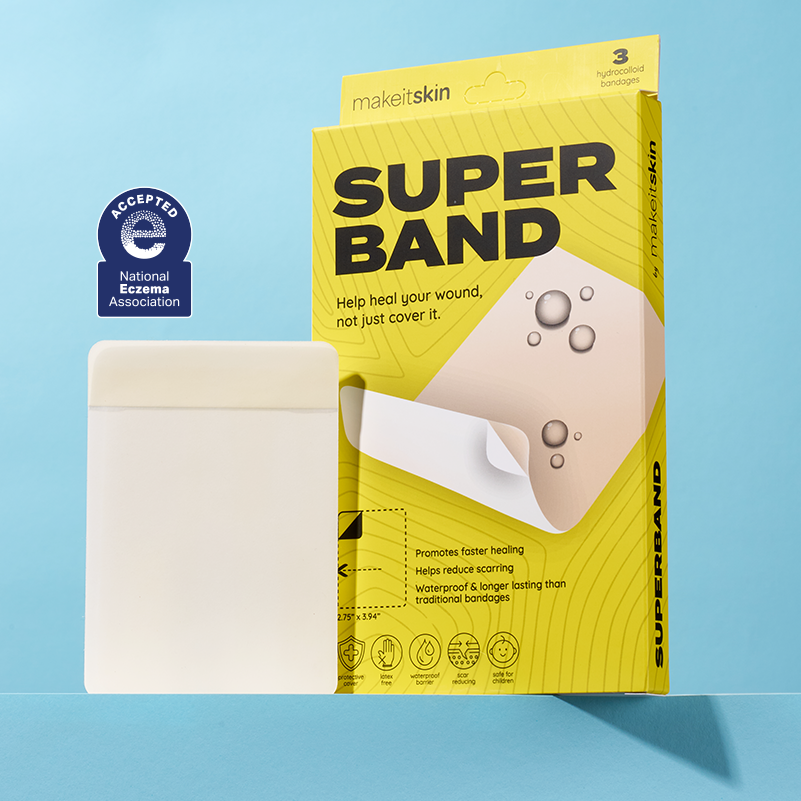
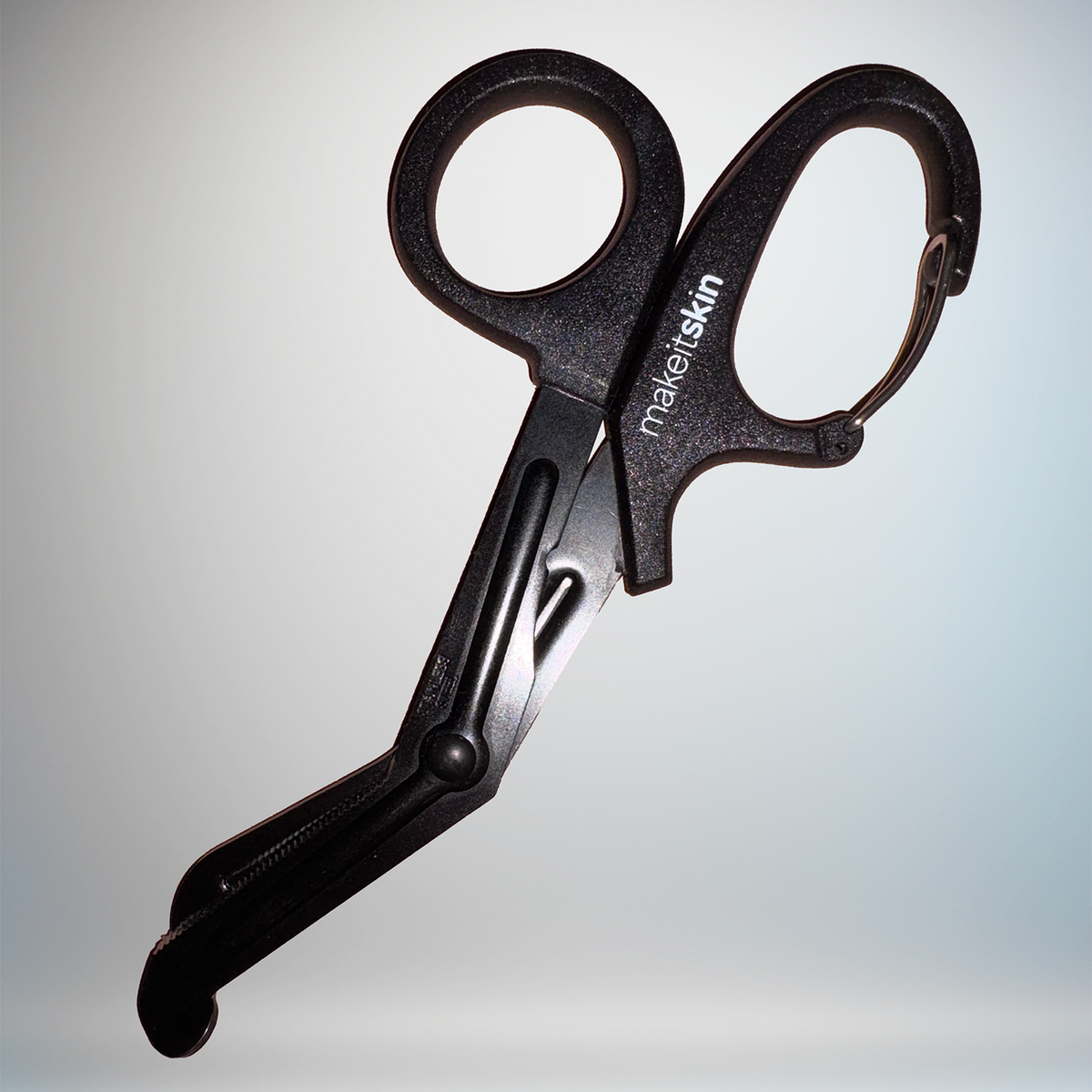
Where it falls short: it is sized for small wounds. A wide road-rash-style scrape on a knee or forearm needs a bigger piece. For that, cut a piece from our SUPERBAND Cut-To-Size flat sheets ($20) at home before the trip, shaped for the spots that usually trouble you. Our Precision Carabiner Shears ($10) clip to a pack strap and have a blunt tip, if you want scissors along for tape and trimming.
SUPERBAND On-The-Go
15.00 USD
Shop now
SUPERBAND Cut-To-Size
20.00 USD
Shop now
Precision Carabiner Shears
10.00 USD
Shop now
BAND-AID HYDRO SEAL: the closest alternative
HYDRO SEAL is the same category of dressing, a pre-cut hydrocolloid bandage. BAND-AID describes the All Purpose version as 100% waterproof, staying secure through hand washing and showers, sterile and not made with natural rubber latex, at 0.78 x 2.3 inches with 10 per box. The Blister Cushions for Heels come 6 to a box at 1.1 x 2.1 inches and are described as delivering multiday protection through showers.
BAND-AID's usage tips say not to cut the bandages, so choose shapes before you leave. If you already carry HYDRO SEAL, you have a hydrocolloid patch in your kit; the main differences from On-The-Go are piece size and the heel-specific shape.
Compeed Blister Plasters: the blister specialist
Compeed makes hydrocolloid plasters designed around foot blisters. The Compeed Extreme page describes cushioning to relieve pressure, adhesive tapered edges that flex with movement, a water-resistant and breathable design, and wear of up to 7 days, with the note that individual experience may vary. That page is Compeed's UK site, so check the US package you buy.
For a hiker who gets heel blisters in boots, a cushioned blister plaster is a sensible addition to a general hydrocolloid patch. Keep a general patch alongside it for scrapes and cuts elsewhere on the body.
Nexcare Advanced Healing Waterproof: the light backup
Nexcare Advanced Healing Waterproof Bandages are a different construction: a thin, clear film with a gel pad in the middle. 3M says the diamond shape gives a better seal around the pad, the adhesive adheres to damp or sweaty skin, the bandage stays on in the bath, shower or pool, and it can be applied with one hand.
That one-handed, damp-skin application is useful on a sweaty day. The gel pad covers a smaller area than the full bandage, so it suits small cuts best.
How to make any dressing stay on outdoors
These steps apply to all four dressings.
- Clean the wound and dry the skin around it completely. Our kit article covers trail cleaning in detail. Every adhesive here needs dry skin to grip.
- Keep ointments, lotions and creams off that patch of skin, including sunscreen lotion. Our On-The-Go directions say ointments or lotions can prevent adhesion, and Compeed asks for skin free of creams and oils. On feet there is a second reason: a 2015 letter in Wilderness & Environmental Medicine by Grant S. Lipman and Bernd V. Scheer cites research finding that ointment raised skin friction by 30% to 40% over baseline for the following 4 to 6 hours.
- Warm the patch in cold weather. Our step-by-step application guide suggests holding the dressing between your palms for 10 to 15 seconds before applying, especially on cool skin.
- Press from the center outward until the edges lie flat, with no air pockets.
- Apply at a rest stop, before you start sweating again. Fresh sweat under an edge is harder to fix than a dry start.
- Check the edges after water crossings and at camp. Replace a dressing once an edge has lifted, since grit collects under a lifted edge.
- Remove it by stretching along the skin. Compeed's directions say to stretch the plaster slowly along the skin to remove it.
For an intact blister, Lipman and Scheer write that a blister that does not hurt and is not in danger of rupturing should be left intact, because its own roof is its best protection. Cover it to reduce further rubbing. Runners will find more on heel-specific options in our heel blister patch comparison.
When a patch is not the answer
A portable dressing is for minor wounds. Get medical care for a cut that gapes or will not stop bleeding under steady pressure, a deep or dirty puncture, a wound you cannot clean, or signs of infection such as spreading redness, warmth, pus, red streaks or fever. If a dressing ever irritated your skin at home, expect the same on the trail and pack an alternative.
FAQ
Can I cut a pre-cut hydrocolloid patch on the trail?
BAND-AID's usage tips say not to cut HYDRO SEAL bandages. On-The-Go is designed to go on as it comes. If you need a custom shape, cut it at home from a Cut-To-Size sheet, leaving at least one centimeter of healthy skin around the wound on all sides, as our application guide recommends.
Does the white bubble under a hydrocolloid patch mean infection?
BAND-AID explains that a white bubble forming under HYDRO SEAL within 24 hours shows the healing process has begun. Infection looks different: spreading redness, warmth, pus or fever, which need a clinician.
Can I swim in a lake with one of these on?
We label On-The-Go waterproof through swimming, and 3M says its Nexcare bandage stays on in a pool. A long swim still tests any adhesive, so check the edges afterward and replace the dressing if water has gotten under it.
Do I need antibiotic ointment under the patch?
Our directions call for no ointment, because ointment stops the patch from sticking. On feet, ointment can also raise friction for hours, as noted above.
Packing for your next hike? Start with the pre-cut patch that goes on without scissors: SUPERBAND On-The-Go. For bigger or odd-shaped spots you can prepare at home, trim Cut-To-Size sheets before you leave.


