
Low-Irritation Blister Patches for Sensitive Skin
For athletes whose skin reacts to bandages, start with what your own skin tolerates, not with whichever patch claims to be gentlest. SUPERBAND On-The-Go is pre-cut and seals against friction and sweat through showers and training, which can mean fewer removals over a training week — but longer wear is not automatically safer for reactive skin. Extended occlusion can trap moisture against skin that is already compromised, and hydrocolloid itself can cause contact dermatitis in some people. Watch how your skin responds, and change a patch sooner rather than pushing for maximum wear time if you notice redness, itching or spreading irritation.
Most advice for reactive skin stops at "use a gentle bandage." That misses what actually inflames the skin during training: the repeated cycle of sticking and stripping, twice a day, on a heel that is also being rubbed by a shoe. We build SUPERBAND for people in exactly that loop, so this guide is about the mechanics of adhesive irritation and how to work around them.
Where the redness usually comes from
Clinicians have a name for the ring of angry skin left behind by a dressing. Medical adhesive-related skin injury (MARSI) is defined by WoundSource as erythema or other skin trauma that persists longer than 30 minutes after the adhesive comes off. The same reference describes the mechanism plainly: damage happens when the bond between skin and adhesive is stronger than the bond between skin cells, so the epidermal layers separate when you pull.
That is one mechanical cause of skin trauma from adhesive removal. Two other categories sit alongside it. Irritant contact dermatitis comes from the chemistry and the friction of the product itself. Allergic contact dermatitis is an immune response to a specific ingredient in the adhesive or the backing.
A 2024 review in the Journal of Tissue Viability notes that most medical adhesives are built from acrylate, hydrocolloid or silicone chemistry, and that all three material families are associated with MARSI. The review also points out why this matters beyond comfort: these injuries reduce skin integrity, cause pain, delay healing and raise infection risk.
"Hypoallergenic" on a box is a marketing claim, not a standardized formula or a guarantee — it does not mean the product is free of all allergens, and it says nothing about how hard the adhesive pulls on removal or whether you personally will tolerate it. If your skin reacts to one product, work out whether the reaction is to the chemistry, to an allergen the label did not anticipate, or to the peeling itself, because those have different fixes.
Sweat, occlusion and why the barrier is already compromised
Researchers writing in ACS Applied Bio Materials measured adhesive irritancy through trans-epidermal water loss, protein stripping, erythema and ease of removal, and described how repeated application and removal of adhesive films lifts corneocytes off the stratum corneum. Their write-up also flags moisture-related damage from prolonged exposure to sweat and wound fluid, and maceration when a dressing traps water against skin that cannot breathe.
Athletes hit both problems at once. You sweat under the patch for two hours, then peel it in the shower while the skin is softened. Repeat that daily for a marathon block and the barrier never gets a quiet week to rebuild. People with eczema start that cycle with a barrier that leaks more water at baseline, which is why a product that a friend tolerates fine can leave them raw. Hydrocolloid adhesive itself can cause irritant or allergic contact dermatitis, and it is not meant to go over actively inflamed or broken eczema skin — do not cover an active eczema flare with an occlusive dressing unless a clinician has advised it for your specific situation, and get clinical advice first if you have a known adhesive allergy.
Fewer removals, but watch your own tolerance
If skin damage accumulates per removal, the number of removals is one variable you can influence. A patch you replace every morning gets peeled roughly seven times a week; a hydrocolloid dressing that holds through showers and sessions might get peeled twice. Fewer removals can mean less mechanical stripping of the skin's surface over a training week.
That is not the whole picture, though. The same seal that reduces removals also keeps the area occluded for longer, and prolonged occlusion can trap moisture against skin, which raises the risk of maceration or irritation for some people. Waterproof edges keep showers and sweat from soaking through the dressing itself, but they do not override your skin's own response — a patch that is holding fine on day one can still start to irritate by day three.
The gel pad absorbing fluid from a de-roofed blister and swelling white is normal and tells you the dressing is working. But "designed to hold" is not the same as "safe to leave on regardless of how skin responds." Check the area periodically, and change a patch early — before its normal wear-time limit — if you notice redness spreading past the border, itching, or softened, whitened skin outside the wound margin.
Start with a pre-cut patch, cut your own for the awkward spots
For most training blisters, a pre-cut option is one you do not have to prepare mid-session: SUPERBAND On-The-Go ($15). It goes on straight from the pack, seals through a shower or a session, and does not ask reactive skin to sit through a trimming step first.
Friction injuries do land in awkward places, though. The back of the heel curves in two directions. Toe joints bend. The arch flexes with every step. A rectangular pre-cut pad can be harder to fit cleanly in those spots and may wrinkle or leave a gap at the edge that is rubbing — and a wrinkle or gap is one common reason a patch lifts early.
That is what SUPERBAND Cut-To-Size ($20) is for: a flat sheet you trim to the shape you actually need, so the adhesive border lands on flat, calm skin instead of on the injured area. Use it for the odd spots the pre-cut pack does not cover well. The Precision Carabiner Shears ($10) clip to a bag for trimming at a trailhead, and the Cut-To-Size Starter Kit ($25) pairs the sheet with the shears if you are starting from nothing.

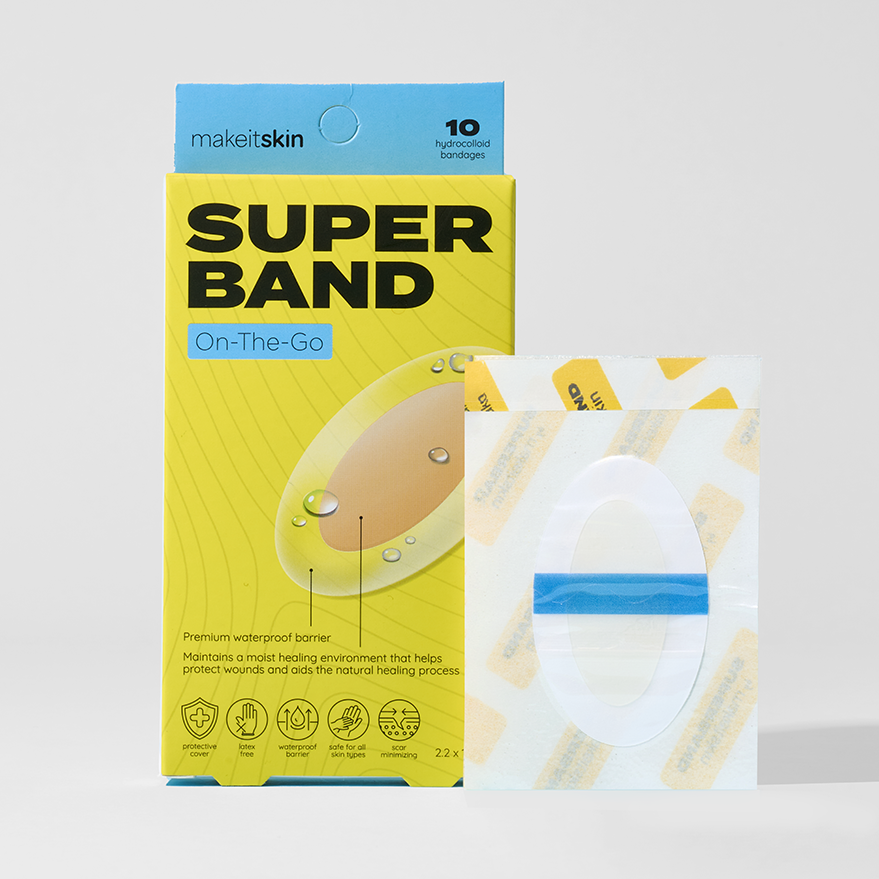
SUPERBAND On-The-Go
15.00 USD
Shop now
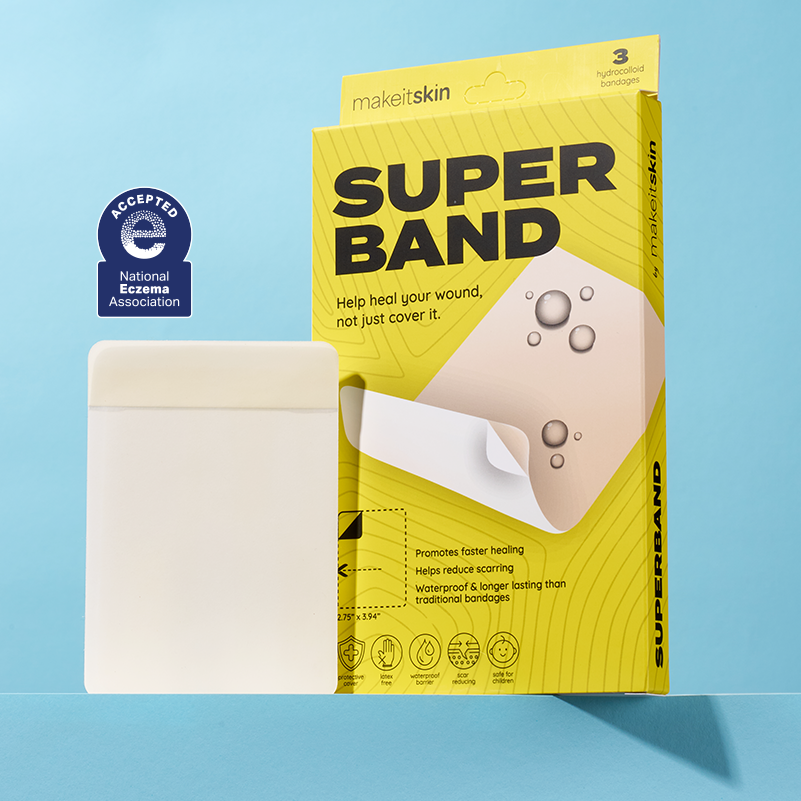
SUPERBAND Cut-To-Size
20.00 USD
Shop now
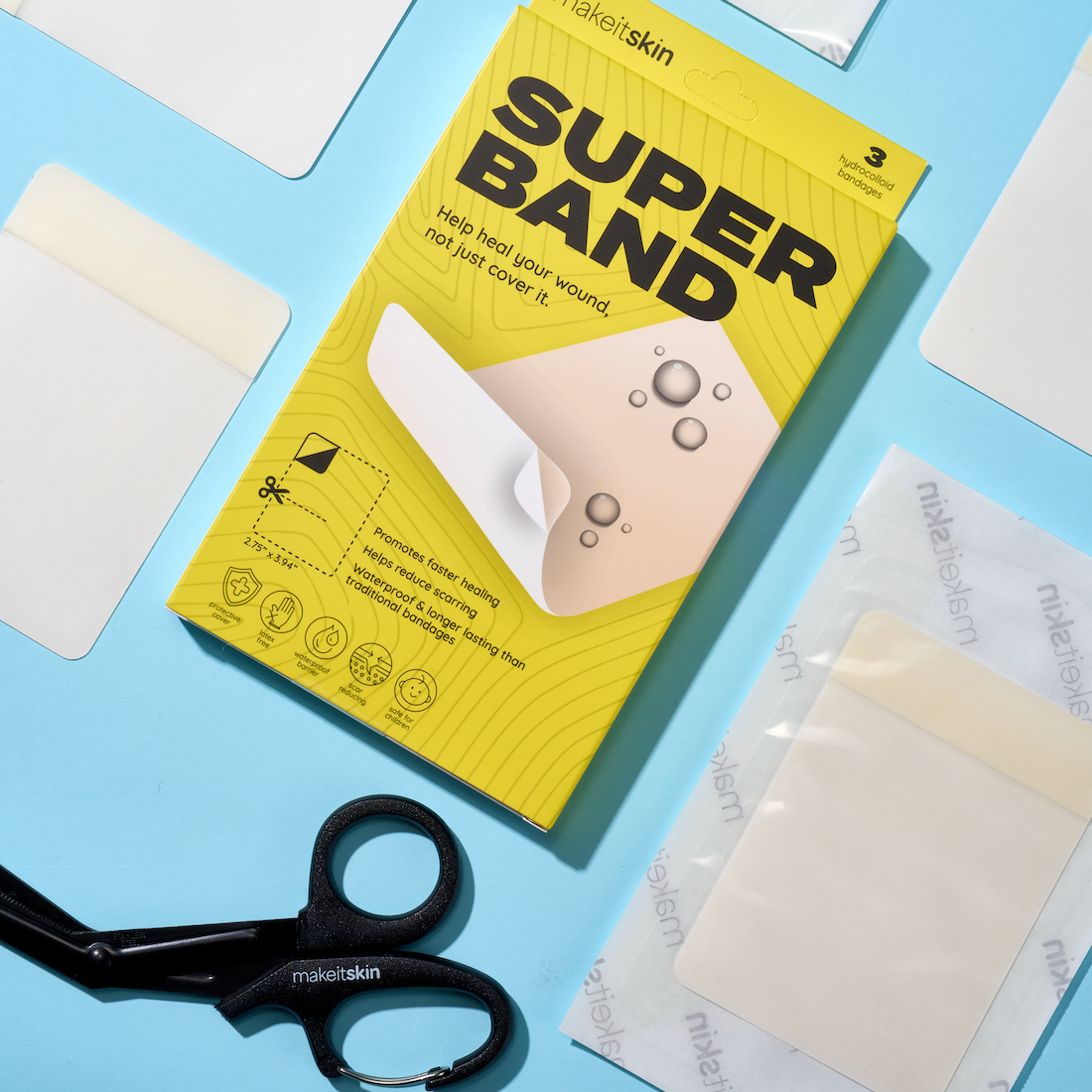
SUPERBAND Cut-To-Size Starter Kit
25.00 USD
Shop now
We are honest about the limits: hydrocolloid is one of the three adhesive chemistries named in the MARSI literature above, and no dressing is immune to individual sensitivity. If you have had a confirmed reaction to hydrocolloid dressings specifically, patch testing with a dermatologist beats guessing at another brand.
Prevention still beats covering
The cheapest blister to treat is the one that never forms. Cleveland Clinic lists the American Academy of Dermatology's prevention basics as well-fitting shoes, avoiding cotton socks that soak up sweat, and reducing friction at known problem areas. For sensitive skin, add one more habit: moisturize with a fragrance-free emollient on the days you are not covering anything, so the barrier has time to recover.
How to apply a patch that survives a long session
- Wash and dry completely. Any residual moisture or lotion under the border shortens wear time.
- If you're using pre-cut On-The-Go, skip this step — apply it directly from the pack, centered over the sore spot. If you're using Cut-To-Size sheet, trim so the patch extends well past the sore area on all sides; the adhesive should meet healthy skin, never the wound edge.
- If you're using Cut-To-Size sheet, round the corners after trimming — square corners catch on socks and start the peel. Pre-cut On-The-Go already ships with rounded corners, so there's nothing to trim here.
- Warm it in place. Follow the label's hold time — about 10-15 seconds of palm pressure — so the adhesive conforms without overworking the seal.
- Leave it alone. Change when the gel reaches the border, when the edges lift, or if you notice pain, spreading redness or discharge.
If a blister roof is still intact, Cleveland Clinic advises leaving it alone rather than popping it, since intact skin is the best barrier you have against infection.
When this stops being a self-care problem
Stop covering and get medical advice if the redness spreads beyond the dressing border, if there is pus or increasing pain, if a blister is very large or blood-filled, or if you have diabetes or circulation problems. Recurrent reactions that follow you across brands are a patch-testing conversation with a dermatologist, since that is the only way to identify which specific adhesive component is responsible.
FAQ
Are hydrocolloid patches safe for eczema-prone skin?
Tolerance varies by person. Hydrocolloid adhesive can cause irritant or allergic contact dermatitis, and it isn't meant to go over actively inflamed or broken eczema skin. Some people find that a sealed patch removing less often is easier on their skin than a daily fabric strip, but that isn't a guarantee for everyone. Test a small patch on calm, intact skin away from any flare before relying on one over a race weekend, and check with a clinician first if you have a known adhesive allergy.
Does the white puffiness mean infection?
Not by itself. That white puffiness is usually the gel absorbing fluid from the wound and swelling, which is a normal sign the dressing is loaded and near a change — but it doesn't rule out infection underneath. Watch for spreading redness past the border, warmth, increasing pain or discharge, and get it checked if any of those show up.
Can I put a patch over an intact blister to keep running?
Covering an intact blister is generally preferable to draining it. Choose a pre-cut patch that's large enough to sit outside the pressure zone, or trim a Cut-To-Size sheet to do the same — either way, the border needs to land on skin, not on the blister edge. This isn't a guarantee you can keep running through it: stop and reassess if pain increases, the area worsens, or the dressing keeps lifting, and adjust footwear or padding to reduce the friction causing it in the first place.
Why does my skin only react in summer?
Heat and sweat change the equation. Prolonged moisture under a dressing softens the stratum corneum and makes it easier to strip, and the ACS Applied Bio Materials work above lists moisture-related damage and maceration alongside adhesive stripping as separate injury routes.
Do I need ointment under a hydrocolloid patch?
Generally no, and it works against you. Ointment prevents the adhesive from sealing to the skin, which shortens wear time and puts you back into more frequent removals.
If you are managing reactive skin through a training block, our related reads on hydrocolloid bandages for eczema-prone skin and wound care for athletes go deeper. For most people, SUPERBAND On-The-Go is the simplest place to start — pick whichever format your own skin actually tolerates, and keep Cut-To-Size on hand for the odd spot a pre-cut pad doesn't fit.


