
Camping First Aid for Skin: Scrapes, Bites, Blisters, Burns
We're MAKEITSKIN, the Dallas-based maker of SUPERBAND, and here's the short answer: most minor skin problems at camp follow one routine. Clean it, let it dry, cover it. Then fix whatever caused it, whether that's a boot that rubs, a bite that keeps getting scratched or a pot handle that got too hot. This guide stays at the campsite, from the tent pad to the fire ring to the lake. It covers minor care only. Anything deep, large, on the face or from an animal belongs in the red flags section near the end.
The clean, dry, cover routine for minor skin injuries at camp
1. Clean. Get dirt and grit off the skin. The American Academy of Dermatology (AAD) advises washing a minor cut with cool or lukewarm water and a mild soap or cleanser to gently remove dirt or debris, then pressing with clean gauze or a washcloth for one to two minutes or until the bleeding stops (AAD: How to treat minor cuts).
2. Dry. A hydrocolloid patch needs clean, completely dry skin to seal. Our On-The-Go directions also say to skip ointments and lotions underneath (SUPERBAND On-The-Go), and our outdoor guide adds a camp-specific catch: sunscreen and bug spray keep a patch from sticking (SUPERBAND outdoor page). Patch first, then let the repellent and sunscreen go on elsewhere.
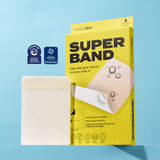
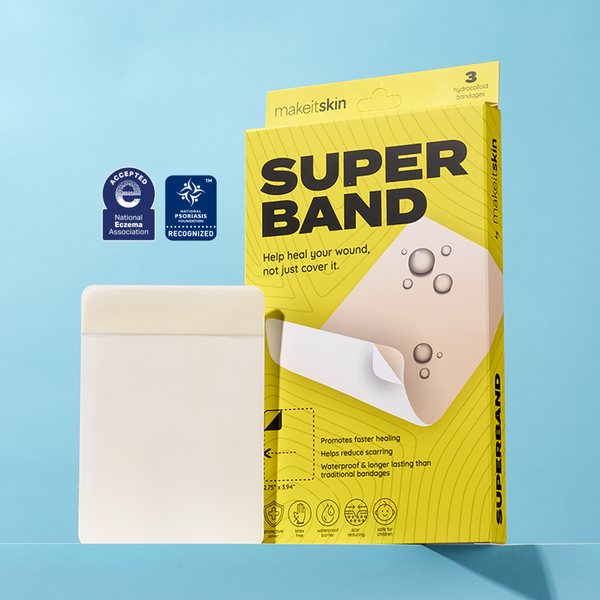
3. Cover. The AAD recommends covering a minor cut with a sterile bandage and keeping it covered until it heals (AAD). A hydrocolloid bandage seals over the spot and holds a moist healing environment. The white spot that forms is gel the hydrocolloid makes as it absorbs fluid, which is normal (SUPERBAND Cut-To-Size). If you want the background on why moist healing matters, our guide on why moist wound healing is the gold standard covers it.
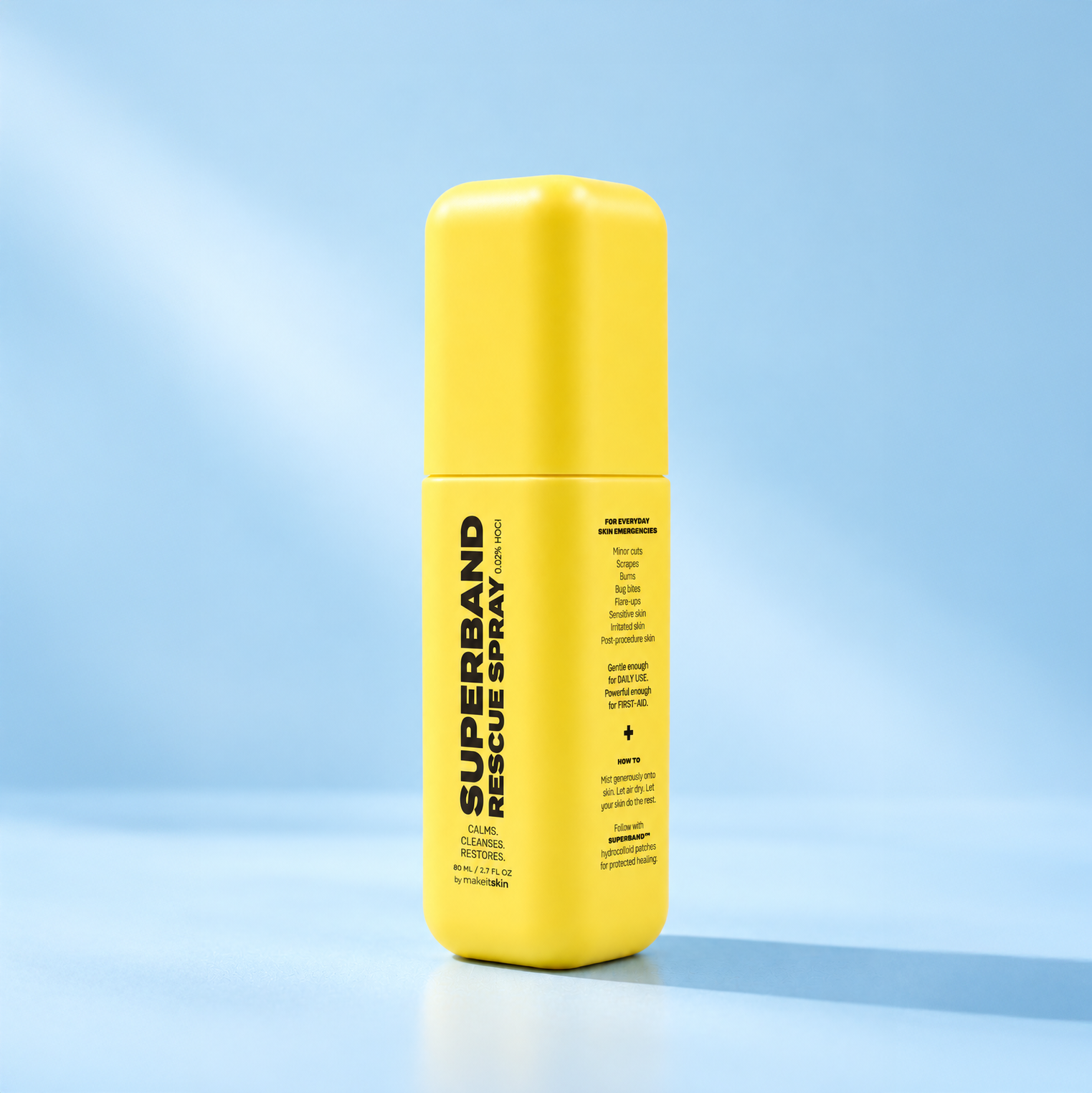
If you use SUPERBAND Rescue Spray for step one, the directions are simple: hold it six inches from the skin and spray until the area is covered, let it air dry or pat dry, then cover with a SUPERBAND hydrocolloid patch (SUPERBAND Rescue Spray).
How do you treat trail rash from a fall while camping?
A slip on wet rock by the creek or a tumble on the campground loop usually leaves a wide, gritty scrape, and the nearest tap may be a long walk away. Here's the order.
- Clean your hands. The AAD lists hand washing as the first step (AAD).
- Get the grit out. Pour clean drinking water over the scrape, with a little mild soap if you packed some, and lift out visible debris with clean tweezers. If dirt is ground in and won't come out, stop there and get it seen.
- Short on water? Reach for Rescue Spray. It helps keep minor cuts, scrapes, bug bites and irritated skin clean, and needs no rinse and no water bottle. Spray, let it dry, then patch.
- Stop any bleeding with gentle pressure from clean gauze.
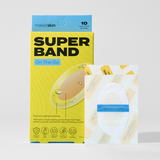
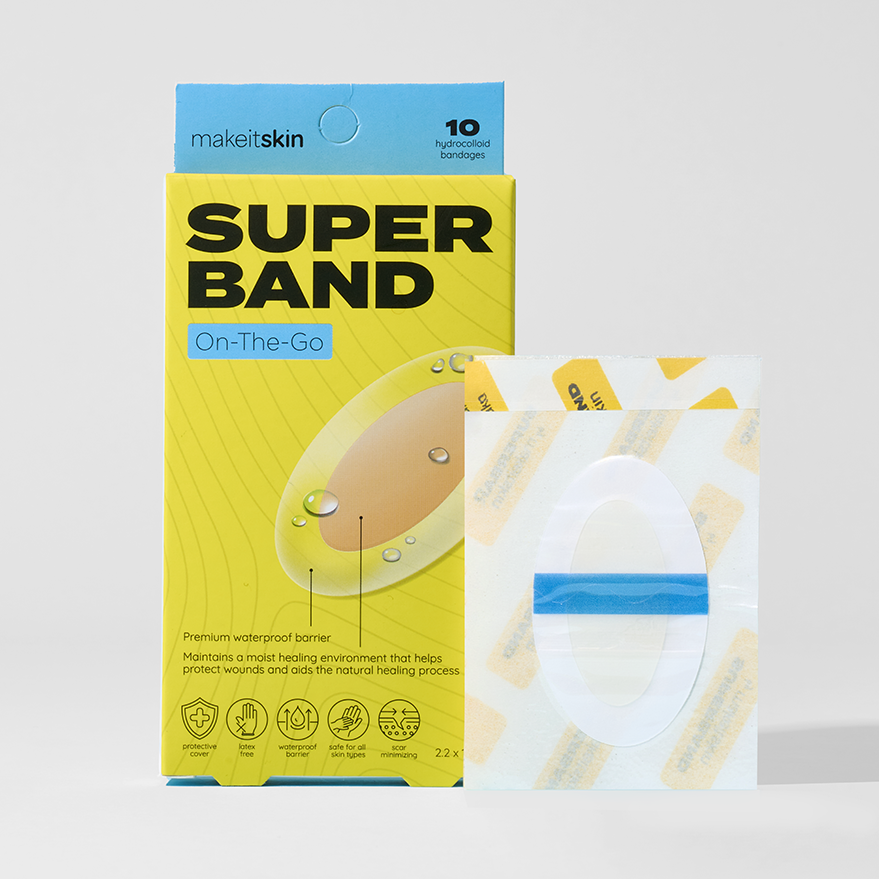
- Cover by size and location. For a small scrape, a pre-cut On-The-Go patch (2.2 × 1.4 in) is ready with no scissors. For a knee, elbow or palm, Cut-To-Size is a flat 2.75 × 3.94 in sheet you trim slightly larger than the spot. Our Precision Carabiner Shears clip to a pack strap or belt loop and have a wide, blunt tip, so trimming a sheet at the picnic table is easy.
Check tetanus, too. The AAD says to make sure your vaccination is up to date if a cut comes from a dirty or rusty object (AAD).
How do I keep my kids from scratching bug bites on a camping trip?
Bites itch, kids scratch, and scratched skin can open up. Cleveland Clinic suggests trimming fingernails to avoid skin tears if you feel the need to scratch, and advises seeing a provider if bites turn into open wounds from itching (Cleveland Clinic: Chigger bites).
Two campsite biters behave differently:
- Mosquitoes bite day and night, according to the CDC (CDC: Preventing Mosquito Bites).
- Chiggers don't burrow into the skin, and the rash usually starts after the mites have already detached, so there's nothing to dig out. Their bites tend to show up where clothing fits tightly, like sock lines and waistbands. The itch is most intense in the first 24-48 hours, and symptoms can last up to two weeks (Cleveland Clinic).
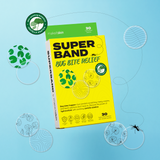
Where Bug Bite Relief fits. SUPERBAND Bug Bite Relief is a small round hydrocolloid patch infused with centella asiatica. It sits over the bite as a physical barrier, so little hands can't get at it. To use it, clean and dry the skin around the bite, apply the patch directly over it, and leave it on until it lifts or turns white. Each patch is single-use. The label says not to use it on deep or infected wounds, and to stop if irritation, rash or worsening occurs.
Bedtime in the tent:
- Patch the worst bites before sleeping bags come out, when scratching is hardest to watch.
- Keep kids' nails short.
- Use an EPA-registered repellent and follow its label. The CDC says not to apply repellent to a child's hands, eyes, mouth, cuts or irritated skin, and not to use products containing oil of lemon eucalyptus (OLE) or para-menthane-diol (PMD) on children under 3. It also recommends loose-fitting long sleeves and pants (CDC).
A patch makes scratching harder. It can't promise how any single bite will heal, so keep an eye out for the warning signs below.
Campfire and camp-stove burns: what to do first
A grab at a hot pot handle or a spark from the fire ring calls for cooling first and covering second.
- Cool it. Mayo Clinic advises running cool, not cold, water over a minor burn for about 10 minutes, and notes that cold water can make the injury worse (Mayo Clinic: Burns first aid). The AAD also recommends cooling for about 10 minutes or until the pain subsides (AAD: How to treat a minor burn). At camp, pour cool drinking water slowly from a bottle or hold a clean, wet cloth on it.
- Take off rings or anything tight near the burn before swelling starts (Mayo Clinic).
- Skip butter, toothpaste and oil. Mayo Clinic says these can trap heat and make the injury worse.
- Leave blisters alone. Both the AAD and Mayo Clinic say not to pop burn blisters.
- Cover once it's cooled and dry. The AAD recommends a nonstick, sterile bandage. Cut-To-Size lists minor burns among its uses, and you can trim it to the shape of the burn.
Rescue Spray is not for serious burns; its label says so directly. Some burns aren't campsite jobs at all. Mayo Clinic says to get emergency help for a burn larger than 3 inches across; one on the face, hands, feet, genitals, buttocks or a major joint; one that wraps around an arm or leg; or one that looks dry, leathery or charred, or has white, brown or black patches (Mayo Clinic).
Hot spots and blisters from new boots
New boots plus a day of hauling gear and gathering firewood can rub a heel raw. The best fix comes early. In a 2016 American Academy of Dermatology release, board-certified dermatologist Anthony Rossi, MD, FAAD, advised stopping your activity right away if you feel pain or discomfort or your skin turns red (AAD: How to Prevent and Treat Blisters).
- Hot spot (red, no bubble yet): clean, dry and patch it before it opens, as our outdoor guide suggests. On-The-Go is pre-cut for heels and toes. For the side of a foot or another awkward shape, trim a piece of Cut-To-Size.
- Blister already formed: the same AAD release advises leaving it alone and avoiding popping or draining, which could lead to infection. If a large, very painful blister does need draining, it says not to remove the "roof," which protects the raw skin underneath. Most blisters heal on their own in one to two weeks.
- Bottom of the foot: the release suggests cutting padding into a donut shape around the blister, then covering both with a bandage.
- Tomorrow's fix: wear nylon or moisture-wicking socks, try two pairs if one isn't enough, and make sure your boots aren't too tight or too loose.
Will a bandage stay on through sweat, dirt and a lake swim?
Ours are built for it. SUPERBAND is 100% waterproof and wears for days (SUPERBAND outdoor page), and the On-The-Go page describes it holding through heavy sweat, showers and swimming (On-The-Go).
The seal starts with how you put it on. Apply to clean, completely dry skin with no ointment, lotion, sunscreen or bug spray underneath. Press from the center outward, then hold your hand over the patch for 10 to 15 seconds so the warmth sets the seal (On-The-Go).
When to change it: replace On-The-Go once it turns white and the bubble reaches the edges. Cut-To-Size is typically worn 1 to 3 days; change it when it turns white and peels at the edges (Cut-To-Size). If the seal breaks or the patch leaks, take it off and run through clean, dry, cover again. Our guide on when to change a hydrocolloid bandage goes deeper.
Before the lake: the CDC says to stay out of oceans, lakes and rivers if you have an open cut or wound. If you do go in while it's still healing, it says to use waterproof bandages that completely cover the wound, because germs in the water can get into open cuts and cause infections. The CDC also notes creeks and streams may not be monitored for water quality (CDC: How to Safely Visit Oceans, Lakes, and Rivers).
Is it worth carrying a wound cleansing spray along with bandages when camping?
It depends on your water and your crew.
When a spray earns its space: drinking water is rationed, the nearest tap is far from your site, or the patient is a kid who won't hold still for a rinse. A hydrocolloid patch needs clean, dry skin to seal, and a mist that dries on its own makes that step quick. Rescue Spray comes in a 2.7 fl oz bottle with a fine mist small enough for a gym bag or glovebox.
When you can skip it: if you have plenty of clean water and a mild soap, that's the cleaning method the AAD describes for minor cuts (AAD). A spray is one more thing in the pack.
What's in it. Rescue Spray is 200 ppm hypochlorous acid, free of alcohol, peroxide, iodine, steroids and fragrance. Hypochlorous acid is a molecule your own white blood cells produce as part of the immune response. A 2020 review in the Journal of Oral and Maxillofacial Surgery, written about disinfection in clinical offices, describes neutrophils and other immune cells producing it in response to injury and infection (Hypochlorous Acid: A Review). That research describes the molecule in general. Rescue Spray's job is narrower: helping keep minor cuts, scrapes, bug bites and irritated skin clean.
Why it doesn't sting. The formula is pH balanced, and it cleanses without the burn of alcohol or the harshness of peroxide and iodine. That matters when the patient is a tired six-year-old at the picnic table.
Label limits: external use only, keep it out of the eyes, and don't use it on deep or puncture wounds, serious burns or animal bites. Stop and ask a doctor if the condition worsens or doesn't improve.
Compact campsite skin-care packing list
- Rescue Spray (2.7 fl oz) to clean before you cover
- On-The-Go pre-cut patches for small scrapes, heels and toes
- Cut-To-Size flat sheets for knees, elbows and minor burns
- Bug Bite Relief patches for the bites kids won't leave alone
- Precision Carabiner Shears to trim sheets
- EPA-registered insect repellent
- A bottle of clean drinking water set aside for rinsing, plus a small mild soap
- Clean tweezers for grit and splinters
- Clean gauze for pressure
- Moleskin or soft padding for pressure-point blisters
Prefer one kit? Our Ultimate Bundle includes every SUPERBAND, the shears and the Safety Yellow Pouch.
SUPERBAND Rescue Spray | Hypochlorous Acid First Aid Wound Spray
19.00 USD
Shop now
Buy SUPERBAND On-The-Go | Pre-Cut Waterproof Hydrocolloid Bandages (10-pack)
15.00 USD
Shop now
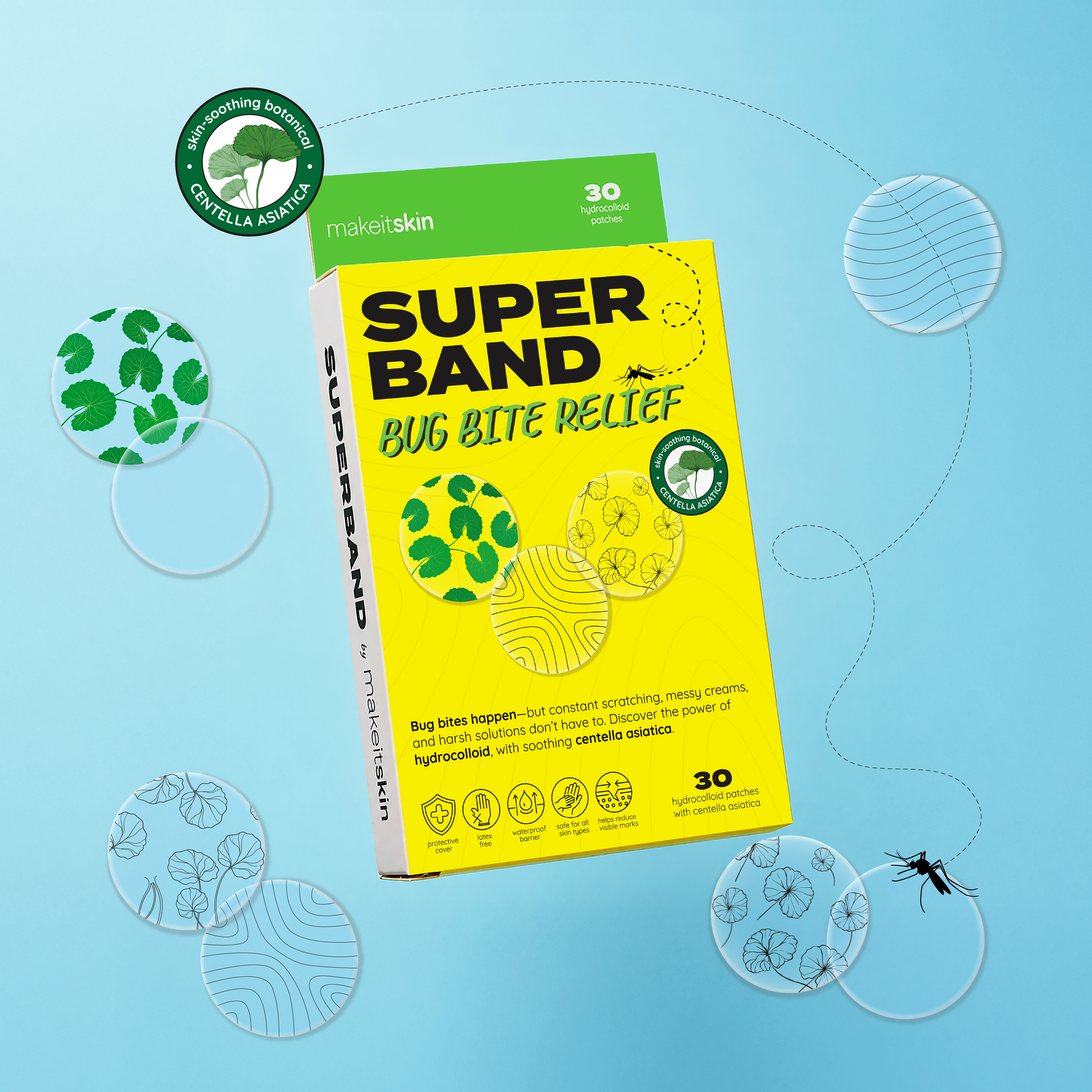
SUPERBAND Bug Bite Relief Patches | Hydrocolloid + Centella Asiatica
16.00 USD
Shop now
Red flags: when camping skin injuries need medical care
Pack up and get care if you see any of these:
- Deep or gaping cuts. The AAD says to seek immediate medical attention if a cut is longer than three-fourths of an inch, more than a quarter inch deep, or won't stop bleeding (AAD). Dirt you can't rinse out also needs a clinician. Not sure? Our guide on whether a cut needs stitches walks through it.
- Any animal bite. Mayo Clinic advises prompt care for a deep puncture, badly torn skin, signs of infection, or any doubt about rabies, and notes bats can infect people without leaving obvious signs of a bite. If you haven't had a tetanus shot in the past five years and the wound is deep or dirty, a booster may be recommended within 48 hours of the injury (Mayo Clinic: Animal bites first aid).
- Serious burns. Larger than 3 inches across; on the face, hands, feet, genitals, buttocks or a major joint; wrapping around a limb; or dry, leathery or charred. Babies and older adults may need emergency care even for minor burns (Mayo Clinic).
- Signs of infection. Pus or increasing redness, swelling or pain (AAD); oozing or skin color changes (Mayo Clinic). For bites, Cleveland Clinic adds skin that swells or leaks pus, or itching that hasn't gone away after two weeks (Cleveland Clinic).
- Anything near the eyes. Keep sprays away from the eyes. Mayo Clinic notes even a minor burn may need medical attention if it affects the eyes, mouth, hands or genitals.
- Anything getting worse. Rescue Spray's label says to stop use and ask a doctor if the condition worsens or doesn't improve. That's a good rule for every scrape at camp.
FAQ
Can I use a hydrocolloid patch on eczema-prone skin at camp?
Cut-To-Size is latex-free, made for sensitive, eczema-prone skin and accepted by the National Eczema Association (Cut-To-Size). Skin still varies from person to person. If a patch causes irritation or a rash, take it off and stop using it.
Can kids use Rescue Spray?
Yes. It's gentle enough for every age in the family, with no fragrance, steroids or alcohol. The label also says to keep the bottle out of reach of children, so an adult should do the spraying.
Pack it before you go
A kit packed at home beats a scramble at the fire ring. See how we pair each product with each outdoor situation on our outdoor page, then pack Rescue Spray, On-The-Go and Bug Bite Relief for the scrapes, bites and hot spots that come with a weekend outside.


