
Waterproof Bandages for Eczema-Prone, Sensitive Skin
Share
We make SUPERBAND, and our advice for choosing waterproof bandages for eczema-prone skin starts here: choose the adhesive for your skin, the dressing for your wound and the waterproof backing for the protection you need. A waterproof label alone does not establish that a bandage will not irritate you.
If bandage removal pulls at fragile skin, a soft silicone adhesive dressing is worth discussing with a pharmacist or dermatologist. DermNet describes soft silicone dressings as designed to reduce skin stripping during dressing changes. DermNet: Silicone dressings
DermNet’s wound-dressing guidance describes hydrocolloids as absorbing wound fluid. That guidance also notes that sensitization to dressing components can occur. DermNet: Wound dressings Neither material name is an irritation-free guarantee.
What does “eczema-safe” mean for a bandage? 🔎
For this decision, we are talking about covering a minor cut or scrape in someone with eczema-prone skin, not treating eczema itself.
Dr Amanda Oakley, a dermatologist writing for DermNet, explains that irritant contact dermatitis is more common in people with atopic eczema, sensitive skin or a compromised skin barrier. Allergic contact dermatitis is different: it involves a particular allergen and can appear after something was previously tolerated. DermNet’s contact dermatitis guidance
If a previous bandage caused a persistent rash, bring its packaging or product name to your dermatologist so you can discuss its components and alternatives.
Latex-free is useful information, but it does not mean free of every potential allergen. DermNet identifies rubber, adhesives and preservatives among possible sources of sensitization in wound dressings. A latex-free label does not answer those separate questions. DermNet’s wound-dressing guidance
Silicone adhesive or hydrocolloid: what should you compare? 🩹
In DermNet’s silicone overview, Dr Ian Logan, then a dermatology specialist registrar at Hammersmith Hospital, describes both silicone wound-contact layers and foam dressings with silicone adhesive. DermNet’s wound-dressing guidance describes hydrocolloids as a fluid-absorbing base mixed with adhesive, often beneath an outer polyurethane covering. Silicone dressings · Wound dressings
| What to compare | Soft silicone adhesive dressing | Hydrocolloid dressing |
|---|---|---|
| Skin contact and removal | Designed to reduce pain and skin stripping during changes. | Check the particular product’s adhesive and removal directions. |
| Wound-fluid handling | Construction matters. A silicone contact layer lets fluid pass to a separate absorbent dressing; silicone-adhesive foam includes absorption. | The hydrocolloid material absorbs wound fluid. Suitability depends on the wound and individual dressing. |
| Waterproof protection | Check the complete dressing’s label, not just the word “silicone.” | Check the product’s waterproof claim and conditions of use, not just the word “hydrocolloid.” |
| Personal compatibility | Compare the materials with your known sensitivities. | Apply the same check rather than treating the category as irritation-free. |
Our recommendation is to choose the complete dressing, not a single material name.
Check intended use, too. DermNet distinguishes silicone wound-contact dressings from silicone gel sheets designed for healed wounds. A scar-care sheet is not automatically the right covering for a fresh scrape. DermNet: Silicone dressings
Where SUPERBAND Cut-To-Size fits ✂️
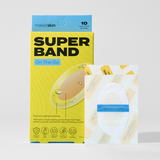
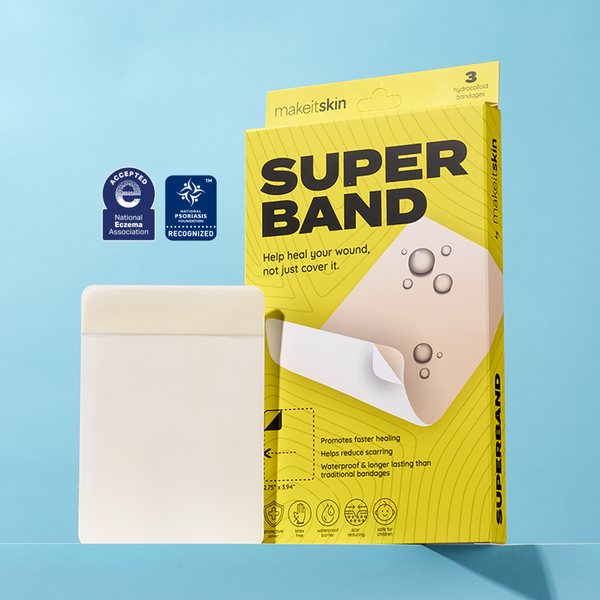
Our at-home custom-fit option is SUPERBAND Cut-To-Size: flat hydrocolloid sheets, not a roll. We describe it as waterproof and customizable, made with latex-free medical-grade hydrocolloid. Its practical role is letting you trim a sheet to fit the area that needs coverage. SUPERBAND Cut-To-Size product details
Consider it when you want a trimmable hydrocolloid format for minor-wound coverage. If your clinician has specifically recommended silicone adhesive, our hydrocolloid description does not establish that it meets that requirement. With a known adhesive allergy, ask about the particular allergen before choosing a dressing.
Moist care is relevant to healing, but it is not a promise of scar-free skin. In the American Academy of Dermatology’s guidance, written by Paula Ludmann, MS, keeping a minor wound moist helps prevent drying and scabbing; wounds with scabs take longer to heal. Proper care can also help reduce a scar’s appearance. This is general wound-care guidance, not evidence that SUPERBAND heals faster than another dressing. AAD’s wound-care guidance
How to apply, change and remove your dressing 💧
We recommend keeping general wound care separate from the instructions for the dressing you choose.
- Clean the minor wound. The AAD advises gently washing cuts and scrapes with mild soap and water to remove debris and keep the area clean. AAD wound-care guidance
- Prepare the surrounding skin as directed. Check the package’s requirements for dry skin and creams. DermNet notes that emollients and topical steroid creams interfere with tape application. Do not assume your usual eczema cream belongs beneath an adhesive dressing; check with your clinician before covering a medicated area. DermNet: Wound dressings
- Keep ointment advice in context. The AAD’s ordinary bandage routine uses petroleum jelly followed by a covering. Do not automatically transfer that routine to hydrocolloid. Follow the chosen dressing’s directions for whether anything goes underneath it. AAD wound-care guidance
- Use the right change instructions. The AAD recommends daily changes for its ordinary bandage routine. Follow the specific package directions for a hydrocolloid or other specialized dressing rather than borrowing a schedule from a different product. AAD wound-care guidance
- Plan removal before application. Read the removal instructions first. If removal hurts or pulls at fragile skin, pause and ask a pharmacist or clinician how to remove that dressing gently rather than forcing it off.
If an edge lifts: check the dressing’s instructions for replacement and skin preparation. We would not make adding stronger tape the default answer for someone already concerned about adhesive reactions.
What if the bandage irritates your skin? ⚠️
If a dressing causes new itching, burning or a rash, stop using it and seek advice about replacement coverage. Avoid putting the same product back over irritated skin. DermNet’s contact dermatitis guidance emphasizes avoiding the cause once identified and protecting damaged skin from further irritants. DermNet: Contact dermatitis
A rash’s appearance alone cannot reliably distinguish irritation from allergy. Dr Oakley explains that different forms of contact dermatitis can look similar, and that clinical patch testing is important for identifying allergens in severe or persistent cases. Repeated reactions are a reason to ask a dermatologist about the cause and alternatives. DermNet: Contact dermatitis
For adhesive-sensitive skin, the AAD suggests a non-adhesive gauze pad secured with paper tape. We present that as an alternative to discuss, not a guarantee of tape tolerance or waterproof protection. Seek immediate medical care for a deep or very painful wound, or if the skin becomes infected, as the AAD advises. A waterproof covering is not a substitute for that care. AAD wound-care guidance
TL;DR: choose for your skin, not just the label ✅
- Compare adhesive compatibility, wound coverage and waterproof protection separately.
- Compare the complete dressing’s materials with your known sensitivities. Neither silicone nor hydrocolloid establishes personal tolerance.
- Follow the chosen dressing’s application, change and removal directions.
- Ask for clinical help when reactions recur or a wound needs more than minor care.
If a custom-fit hydrocolloid sheet matches your needs, review our SUPERBAND Cut-To-Size materials and product details, then follow the package directions for use.


