
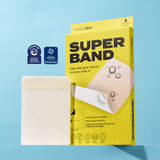
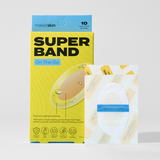
When Should You Change a Hydrocolloid Bandage?
Share
We make SUPERBAND hydrocolloid bandages, and our advice starts with the dressing, not a countdown: change it if fluid leaks, the seal breaks or significant fluid builds up. These are dressing-change indications in the National Athletic Trainers’ Association’s acute skin trauma guidance. Follow your specific package’s instructions for timing and removal.
🩹 Check the seal, not just the clock
In the association’s 2016 position statement, Joel W. Beam and colleagues identify these reasons to change a dressing:
- Leakage: fluid escapes from beneath it.
- Separation: the dressing pulls away from the skin around the wound.
- Significant fluid accumulation: fluid builds up beneath the dressing.
The NATA guidance makes its suggested wear durations conditional on dressing integrity and the absence of infection or adverse reactions. A wear-time limit is not a reason to leave a compromised dressing on.
💧 Does a bubble mean it needs changing?
Beam and colleagues explain that moisture beneath an occlusive dressing can make it expand, and this should not be confused with infection. Check the seal and symptoms rather than judging by a bubble alone. See the NATA position statement’s dressing-monitoring guidance.
🚩 When a fresh bandage is not enough
According to the NHS cuts and grazes guidance, seek prompt medical assessment for redness, swelling and increasing pain, pus, fever or feeling generally unwell. Simply covering those symptoms with another patch is not the next step.
Get emergency care for bleeding you cannot stop, a very large or deep wound, loss of feeling or difficulty moving the injured area. An embedded object also needs emergency assessment. Do not remove it yourself. These warning signs are covered in the NHS guidance.
🧼 Prepare for the replacement
For a small cut or scrape suitable for home care, once bleeding has stopped:
- Wash and dry your hands. Remove the old dressing according to its instructions.
- Rinse the wound with tap or bottled water, then gently pat dry with clean gauze or a clean cloth.
- Clean the surrounding skin with soap and water, keeping soap out of the wound.
- Dry the surrounding skin and apply a fresh dressing according to its package directions.
The cleaning steps follow the NHS guidance for small cuts and scrapes.
Troubleshooting: if the replacement will not seal, revisit the package’s skin-preparation and application instructions rather than trying to stretch its wear time.
✅ TL;DR
- Follow your specific bandage’s change and removal directions.
- Check for leakage, separation and significant fluid buildup.
- Seek medical care for worsening wound symptoms.
Before your next application of our SUPERBAND bandages, check the directions on your package.


