
Hypochlorous Acid vs Peroxide, Alcohol and Soap for Cuts
We make SUPERBAND hydrocolloid bandages and SUPERBAND Rescue Spray, so this question lands in our inbox a lot. The honest answer: for most minor cuts and scrapes, clean running water and a little mild soap around the wound are the baseline, and usually that is all you need. Clinicians advise against putting hydrogen peroxide or rubbing alcohol in a wound because they can harm healthy tissue. A no-sting hypochlorous acid spray like SUPERBAND Rescue Spray is a convenient option when you are nowhere near a sink, or when the person with the scrape is a squirming kid or has sensitive skin. Its job is helping keep minor cuts, scrapes, bug bites and irritated skin clean.
Below we compare five options (soap and water, hydrogen peroxide, rubbing alcohol, povidone-iodine and hypochlorous acid) on sting, effect on tissue, best use, fit for kids and sensitive skin, and what to avoid.
What is the best way to clean a minor cut or scrape?
Current first aid guidance is simple. Mayo Clinic's cuts and scrapes first aid guide lays it out like this:
- Wash your hands.
- Stop the bleeding. Minor cuts usually stop on their own. If not, press gently with a clean bandage or cloth and raise the area.
- Rinse with water. Mayo Clinic notes that keeping the wound under running water lowers the risk of infection.
- Wash around the wound with soap, but keep soap out of the wound itself.
- Remove dirt or debris with tweezers cleaned with alcohol, and see a healthcare professional if you cannot get it all out.
The same guide says not to use hydrogen peroxide or iodine in the wound, because both can irritate it.
Nicholas Kman, MD, an emergency physician at Ohio State Wexner Medical Center, gives matching advice in Ohio State's wound care myths article (2022): wash the wound out with plenty of warm, soapy water as soon as possible. He adds that the literature shows tap water is fine for this.
What counts as minor? A shallow cut or scrape that stops bleeding with gentle pressure and that you can rinse fully clean. Rescue Spray is not for deep or puncture wounds, serious burns or animal bites, and the povidone-iodine label says to ask a doctor first for those (more on that below). If you are unsure, see our guide on whether a cut needs stitches or just a bandage.
The goal of cleaning, then, is to flush out dirt without harming the healthy tissue that has to do the healing. That is the lens for the comparison below.
Hypochlorous acid vs alcohol, peroxide, iodine and soap: comparison table
| Option | Sting | Tissue effect | Best use | Kids and sensitive skin | What to avoid |
|---|---|---|---|---|---|
| Running water and mild soap | Water in the wound; soap only around it | The baseline in first aid guidance (Mayo Clinic) | Most everyday cuts and scrapes, whenever a sink or shower is close | The same baseline steps apply; watch individual skin tolerance to soap | Getting soap into the wound itself |
| Hydrogen peroxide | Can irritate (Mayo Clinic) | Can damage surrounding healthy tissue (Ohio State) | Not recommended for cleaning wounds | No advantage | Pouring it into a cut |
| Rubbing alcohol | Keep it off open wounds | Can damage surrounding healthy tissue (Ohio State) | Cleaning tweezers before removing debris (Mayo Clinic) | Keep it off wounds and irritated skin (Drugs.com) | Using it in the wound |
| Povidone-iodine (10% OTC antiseptic) | Can irritate (Mayo Clinic) | An OTC first aid antiseptic labeled for minor cuts, scrapes and burns (DailyMed) | Only as the label directs, after cleaning | Not on a young child without medical advice; not if allergic to it (Drugs.com) | Eyes, large areas, more than 1 week without a doctor; ask a doctor first for deep or puncture wounds, animal bites, serious burns (DailyMed) |
| Hypochlorous acid cleanser | >Our spray is no-sting (Rescue Spray) | >A molecule the body makes itself; a 2020 review calls it nontoxic (J Oral Maxillofac Surg review) | Cleansing minor cuts and scrapes away from a sink, before a patch | Made gentle enough for sensitive and eczema-prone skin and every age in the family (Rescue Spray); skin tolerance varies by person | Eyes, deep or puncture wounds, serious burns, >animal bites (Rescue Spray) | >
Is hydrogen peroxide or rubbing alcohol bad for wounds?
For cleaning an everyday cut, they are the wrong tools. Dr. Kman at Ohio State Wexner Medical Center puts it directly: these liquids may kill bacteria, but rubbing alcohol and hydrogen peroxide can damage surrounding healthy tissue and should not be used to clean wounds. Mayo Clinic likewise tells readers to keep hydrogen peroxide out of a wound because it can irritate it.
Plenty of us grew up reaching for these bottles first, but the guidance above is to keep both out of the wound. Alcohol still earns a spot in the first aid kit: Mayo Clinic suggests it for cleaning the tweezers you use to pick out debris. Just keep it off the wound itself.
What about povidone-iodine?
Povidone-iodine sits in a different place. It is an over-the-counter first aid antiseptic, and US drug labels such as this povidone-iodine 10% solution label on DailyMed tell you to clean the area first, then apply a small amount 1 to 3 times daily, letting it dry before bandaging.
That label also sets clear limits: not in the eyes, not over large areas of the body, and not for longer than 1 week unless a doctor directs it. It says to ask a doctor first for deep or puncture wounds, animal bites or serious burns. Drugs.com adds that it should not be used by anyone allergic to it, should not go on a young child without medical advice, and can stain skin and fabric. For everyday home first aid, Mayo Clinic's advice is still to rinse with water and skip iodine in the wound, since it can irritate.
What is hypochlorous acid, and is it better than alcohol or peroxide?
Hypochlorous acid (HOCl) is a molecule your own immune system makes. A 2020 review by Block and Rowan in the Journal of Oral and Maxillofacial Surgery explains that neutrophils and other white blood cells produce it in response to injury and infection, and describes it as a nontoxic, noncorrosive and well-studied compound. The same review summarizes clinical research on the molecule, including surgical studies in which HOCl solutions used to irrigate open wounds lowered bacterial counts. That is research about hypochlorous acid in clinical settings, not a result for any home spray, ours included.
So is it better than alcohol or peroxide for cleaning a cut? Alcohol and peroxide are the liquids clinicians warn against putting in wounds. Rescue Spray is a no-sting, pH-balanced hypochlorous acid mist with no alcohol, peroxide or iodine. But it does not replace running water. If there is dirt, grit or gravel in a scrape, rinsing is what physically flushes it out. Think of a hypochlorous spray as a gentle cleanser for skin that is already free of debris, not a way to skip the rinse.
Is a cleansing spray worth it, or is soap and water enough?
If you are at home with a sink, soap and water is usually enough. We would rather you know that than buy something you don't need.
A spray step earns its place in a few situations:
- Away from a sink: on the trail, at the sideline, in the car, on a trip.
- Kids who fight the cleanup: a no-sting mist is easier than holding a small hand under the tap mid-meltdown.
- Sensitive or eczema-prone skin: Rescue Spray is gentle enough for sensitive and eczema-prone skin.
- Touch-ups before re-covering: a quick cleanse before you put on a fresh patch.
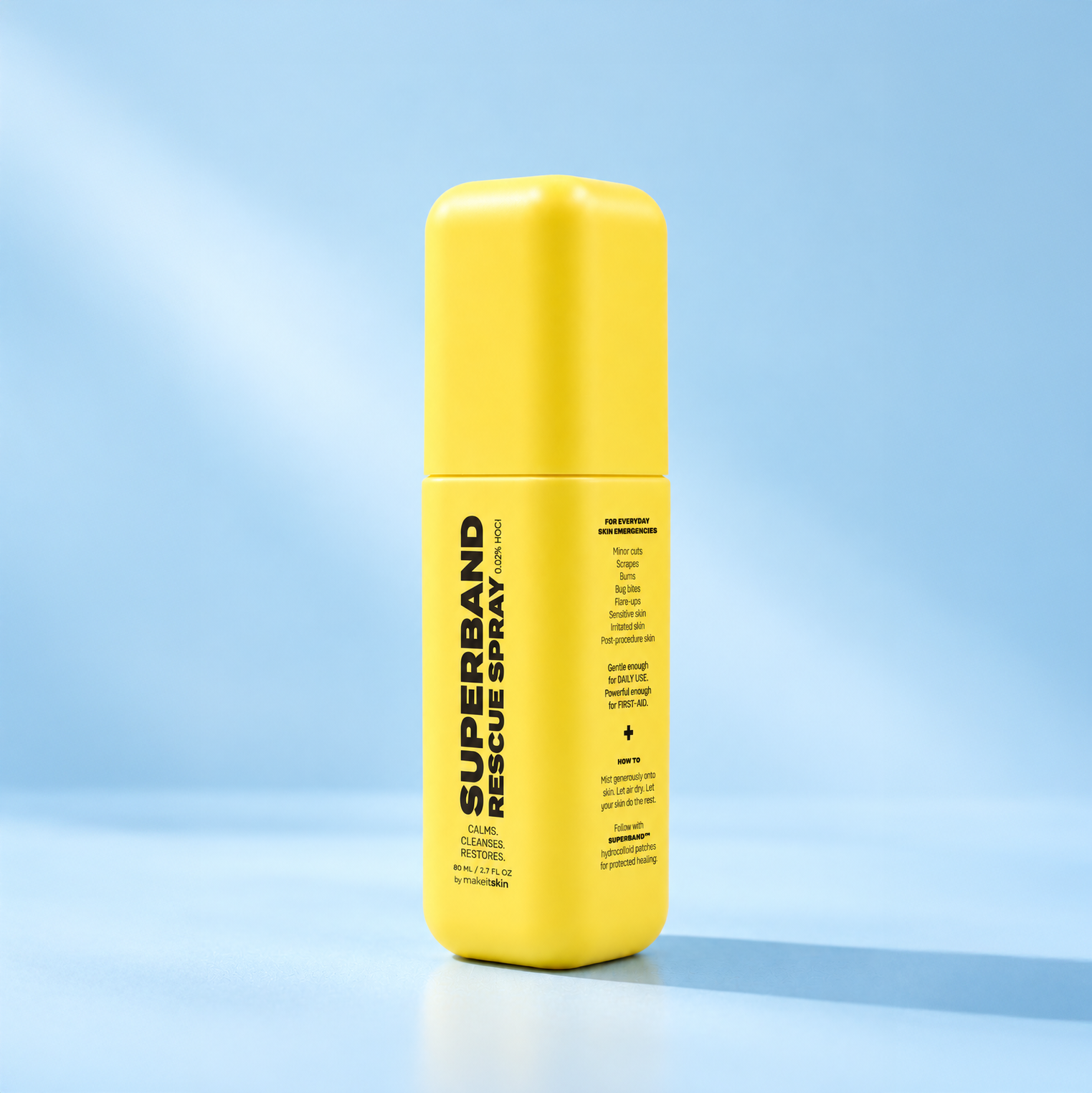
Here is what SUPERBAND Rescue Spray is:
- 2.7 fl oz of 200 ppm hypochlorous acid, $19
- No sting
- Free of alcohol, peroxide, iodine, steroids and fragrance
- Made for every age in the family (the label says to keep the bottle out of reach of children)
What it is for: helping keep minor cuts, scrapes, bug bites and irritated skin clean. That is the whole claim.
How to clean and cover a cut: spray, dry, patch
- Rinse first if it is dirty. If there is visible dirt or debris, flush it with water before anything else.
- Spray. Hold the bottle about six inches from the skin and spray until the area is covered.
- Dry. Let it air dry or pat dry. Our bandage directions call for clean, completely dry skin so the hydrocolloid can seal, so don't rush this step.
-
Patch. Cover with a SUPERBAND hydrocolloid bandage:
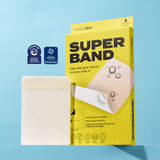
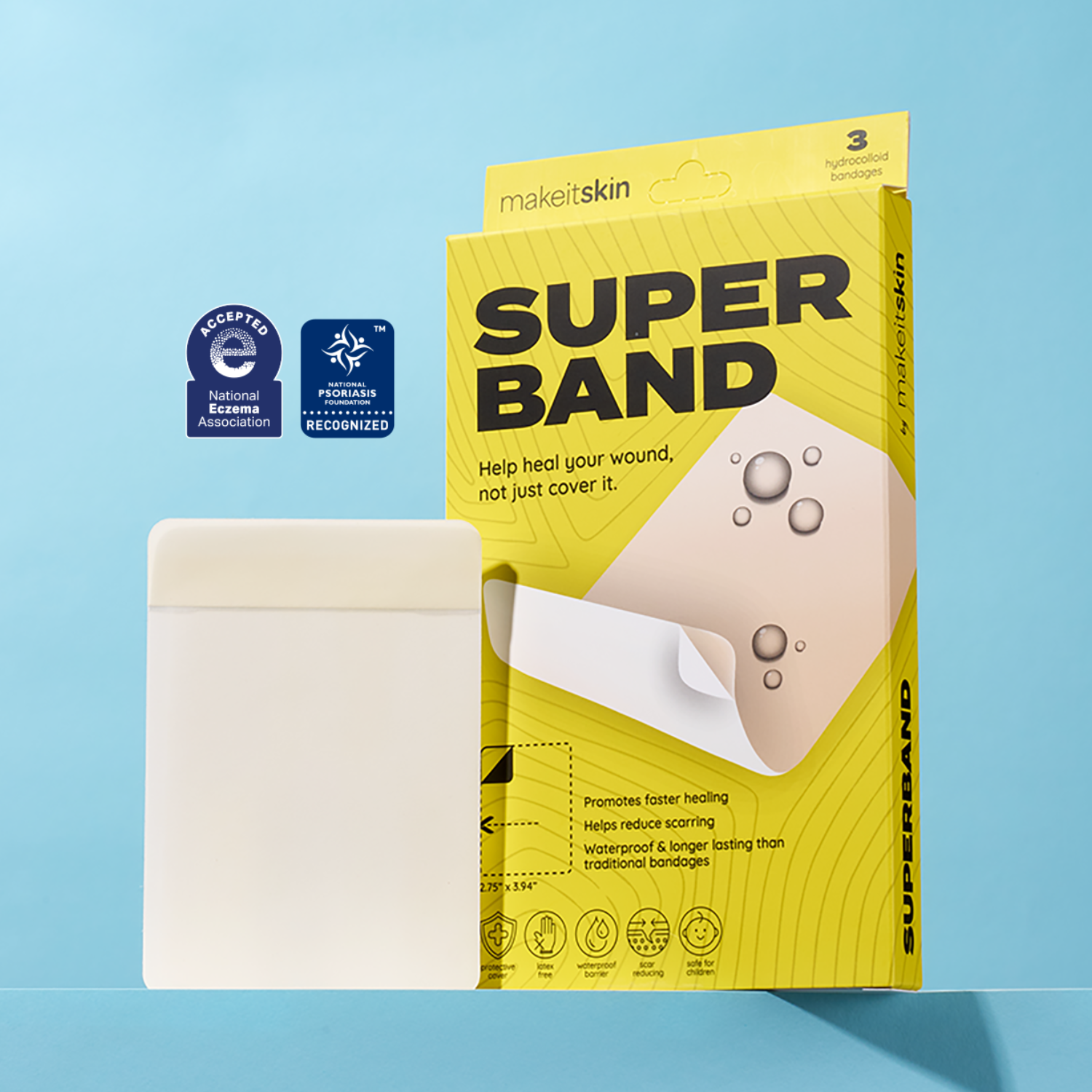
- Cut-To-Size ($20) is a pack of 3 flat sheets, 2.75 x 3.94 in each, that you trim slightly larger than the spot. It is made for cuts, scrapes, minor burns and blisters. Wear it 1 to 3 days and change it when it turns white and peels at the edges.
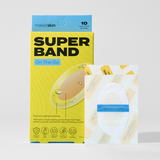
- On-The-Go ($15) is a 10-pack of pre-cut 2.2 x 1.4 in bandages for runs, the gym and travel. Press from the center out, then hold your palm over it for 10 to 15 seconds to set the seal.
Our hydrocolloid bandages are waterproof and hold a moist healing environment over the wound. Dr. Kman's Ohio State article also notes that occlusive dressings (ones that don't let air or moisture in or out) have been associated with a significantly lower infection rate and faster healing than gauze dressings. That is research on the dressing type in general.
SUPERBAND Rescue Spray | Hypochlorous Acid First Aid Wound Spray
19.00 USD
Shop now
Buy SUPERBAND Cut-To-Size Hydrocolloid Bandage | Waterproof, Eczema-Safe
20.00 USD
Shop now
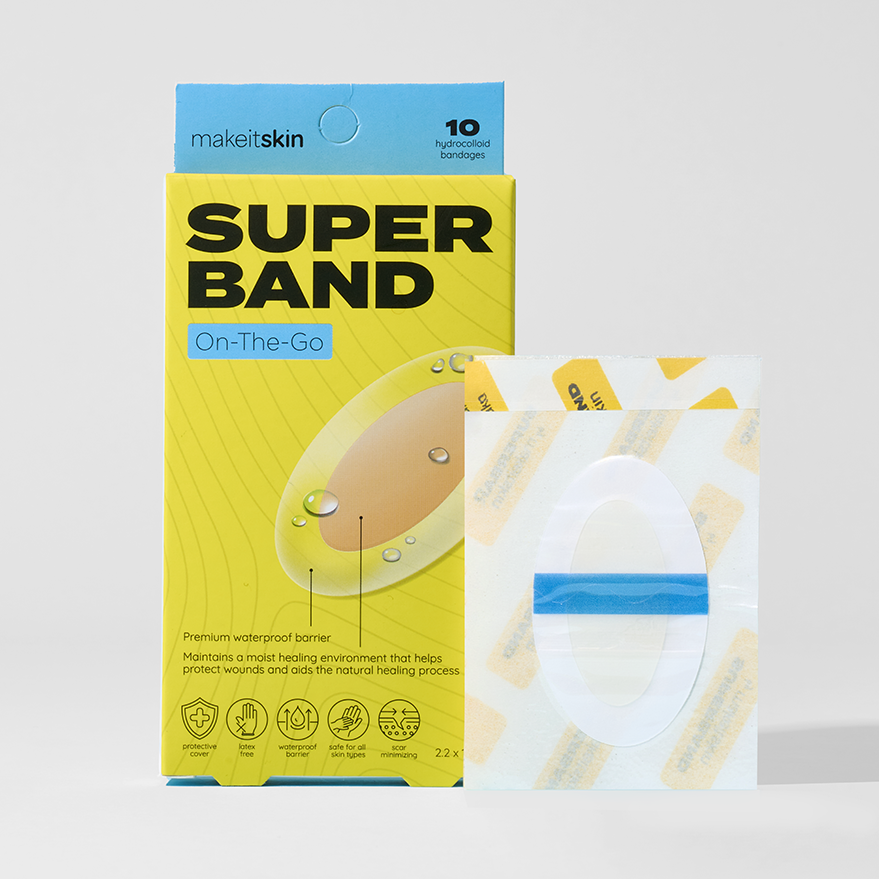
Buy SUPERBAND On-The-Go | Pre-Cut Waterproof Hydrocolloid Bandages (10-pack)
15.00 USD
Shop now
When to skip home care and see a doctor
The Rescue Spray label is clear about where it does not belong:
- Not for deep or puncture wounds, serious burns or animal bites
- Avoid contact with the eyes
- For external use only
- Stop use and ask a doctor if the condition worsens or does not improve
Mayo Clinic also advises seeing a healthcare professional if:
- You see signs of infection: spreading color change, increasing pain, drainage, warmth or swelling
- You cannot remove all the debris from the wound
- The wound is deep or dirty and you haven't had a tetanus shot in the past five years
FAQ
Can I use hypochlorous acid on my child's scrape?
Rescue Spray is gentle enough for every age in the family, with no fragrance, steroids or alcohol, and no sting. Keep it away from the eyes and keep the bottle out of children's reach, as the label says. The same limits apply as for adults: not for deep or puncture wounds, serious burns or animal bites.
Should I put ointment under a hydrocolloid bandage?
Not under ours. Our On-The-Go directions say to clean and completely dry the area without ointments or lotions, because they stop the bandage from sealing properly. If you prefer an ointment, use a regular bandage over it instead.
The short version
Rinse with running water and wash around the cut with mild soap. Skip the peroxide and alcohol. When there is no sink nearby, or the patient is small or sensitive, SUPERBAND Rescue Spray gives you a no-sting way to cleanse before you cover with Cut-To-Size or On-The-Go. Spray, dry, patch, and let your skin do the rest.


