
Trail Running First Aid: Blisters, Chafing and Falls
We make SUPERBAND hydrocolloid bandages and SUPERBAND Rescue Spray, so this is our guide to the small first aid kit that rides in a trail vest or running belt. The short answer: carry pre-cut hydrocolloid patches for hot spots and blisters, a no-sting way to clean a scrape after a fall, and something that cuts friction where skin rubs. Then finish the job at home with a proper clean, a better-fitting cover and a few days of watching. This guide covers minor trail problems: roots, rocks, creek crossings and the occasional fall. Deep cuts, puncture wounds or a wound you can't get clean belong with a clinician.
What first aid do trail runners carry for blisters and scrapes?
Vest pockets are small, so every item should do one clear job.
| Item | Job | When you reach for it |
|---|---|---|
| SUPERBAND On-The-Go pre-cut patches | Covers a hot spot, blister or small scrape | The moment a spot starts to burn, or after a fall |
| Rescue Spray, or the water you already carry | Cleans dirt off a scrape before you cover it | After a fall, before patching |
| Powder, petroleum jelly or an anti-chafe balm | Reduces friction on intact skin | Before the run, and on spots that start to rub |
| Dry pair of socks | Gets wet fabric off your feet | After a creek, a downpour or very sweaty miles |
| Gauze and a strip of tape | Temporary cover for an area too big for a patch | A wide scrape you will deal with at home |
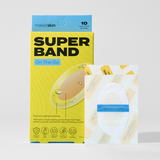
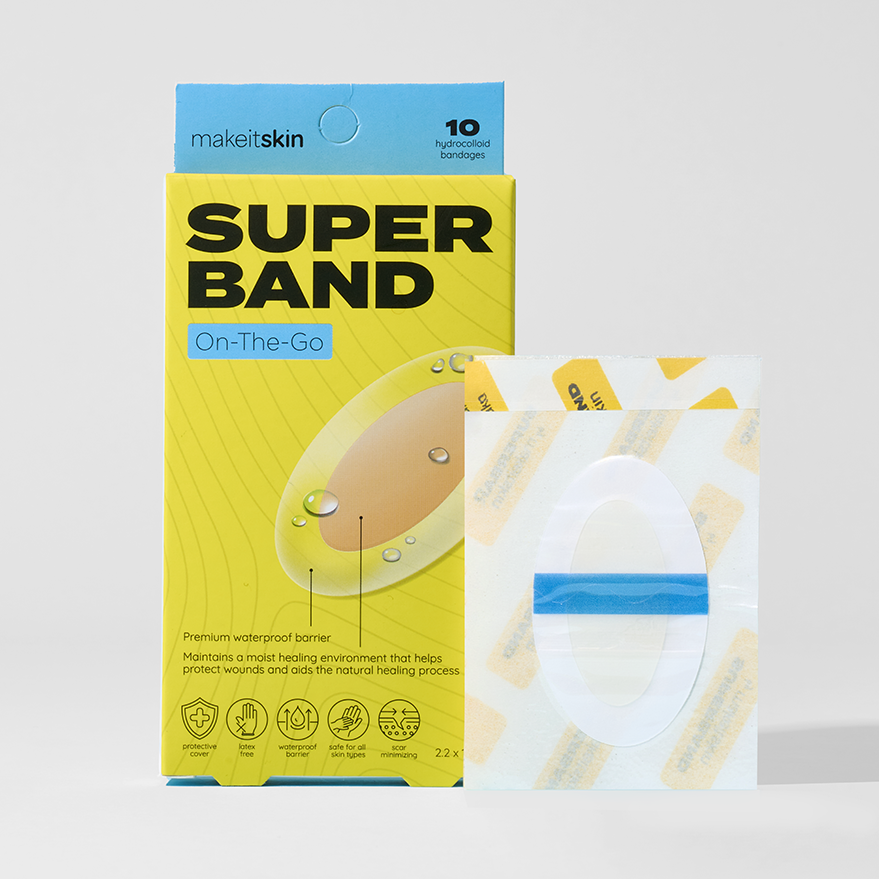
On-The-Go is a pack of 10 sterile hydrocolloid bandages, each pre-cut to 2.2 × 1.4 in, per the On-The-Go product page. No scissors needed, which matters when you are balancing on one leg at an aid station.
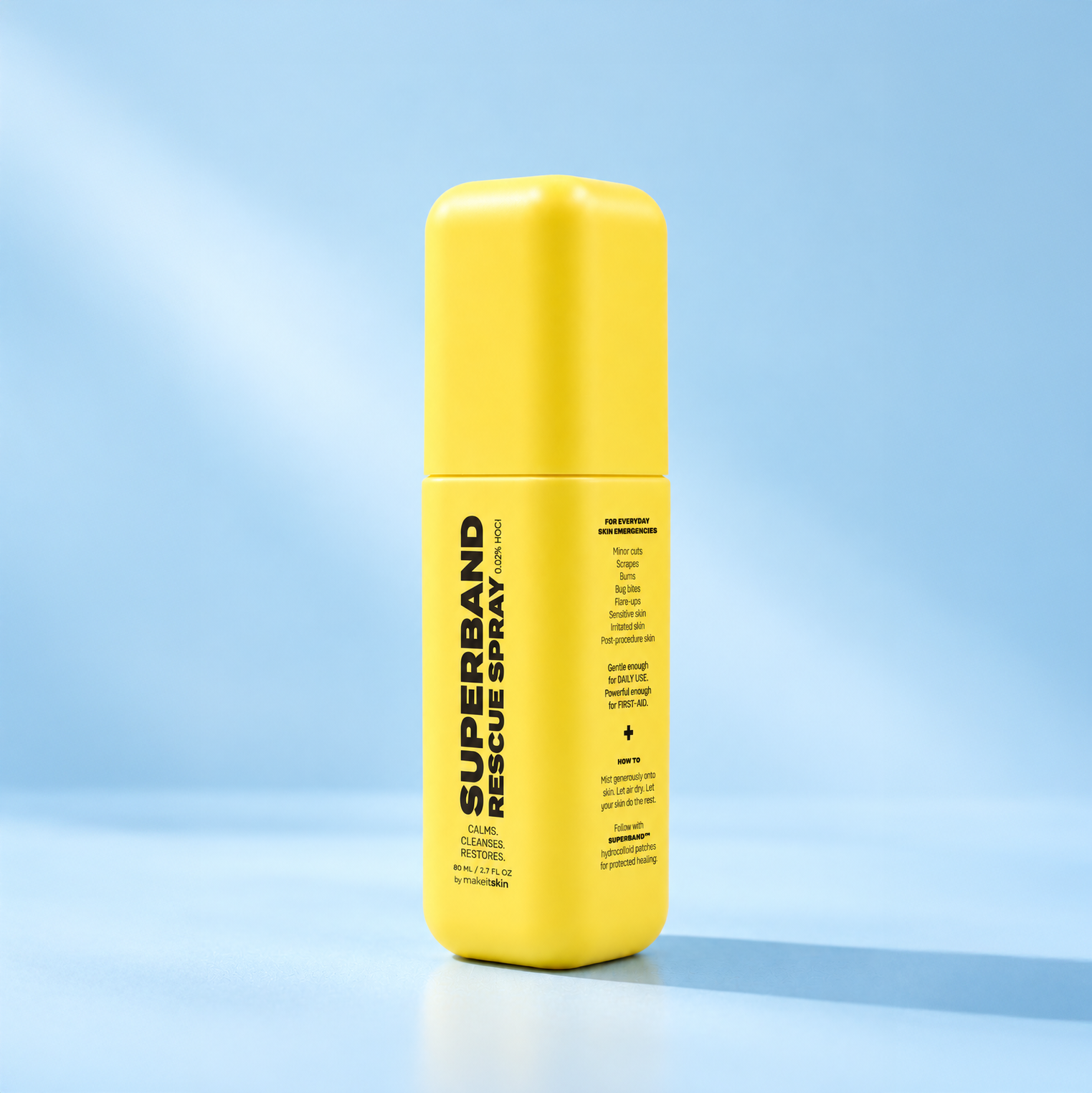
Rescue Spray comes in a 2.7 fl oz bottle (Rescue Spray page). If it doesn't fit your vest, keep it in the car at the trailhead or in a drop bag, rinse with water on the trail, and do the full clean when you get there.
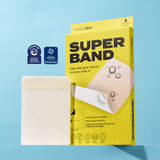
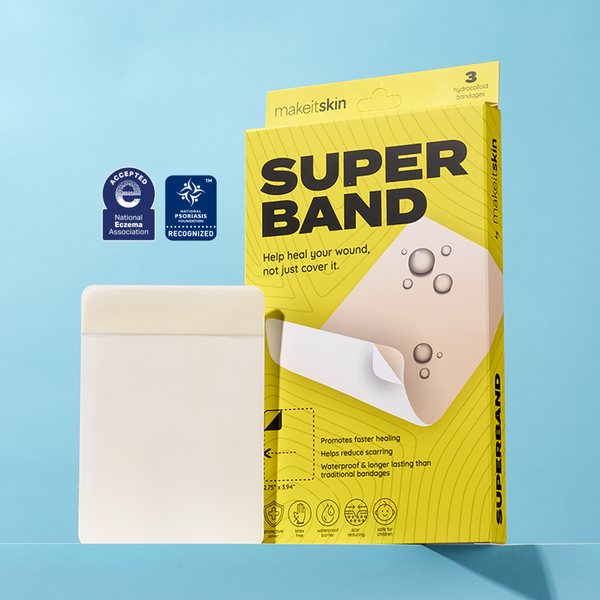
SUPERBAND Cut-To-Size stays home. It is a flat hydrocolloid sheet (3 sheets, 2.75 × 3.94 in each) that you trim to fit the odd shapes trails leave behind, a job that is easier at a table than on a switchback.
How do you treat a hot spot mid-run before it becomes a blister?
A hot spot is the warning. Mayo Clinic's blister first aid guide calls it a sign that a blister is forming and says to treat it right away with tape, a blister bandage or moleskin. In a 2016 American Academy of Dermatology release on preventing and treating blisters, board-certified dermatologist Anthony Rossi, MD, advised stopping the activity if you feel pain or discomfort or your skin turns red, because otherwise you may get a blister.
On the trail, that looks like this:
- Stop. A minute on the side of the trail is cheaper than the miles you would limp on an open blister.
- Dry the skin completely. Wipe off sweat and grit. On-The-Go's directions call for a clean, completely dry area with no ointments or lotions.
- Apply the patch. Peel off the white backing, center the bandage over the spot and press from the center out. Peel away the top film (the blue strip), then hold your hand over it for 10 to 15 seconds to set the seal (On-The-Go directions).
- Swap wet socks if you can. Mayo Clinic notes that moisture increases the risk of blisters forming.
If a blister has already formed, leave it intact and cover it. Mayo Clinic says that if a blister isn't too painful, you should try to keep it from breaking open, since unbroken skin over it may act as a natural barrier to bacteria. Dr. Rossi's AAD advice is to avoid popping or draining a blister because it could lead to infection, and to keep the blister's "roof" on to protect the raw skin underneath. Draining is for a large, very painful blister, with a sterilized needle and clean hands. That is a job for home, not a dusty trail. Mayo Clinic adds that people with diabetes or poor circulation, or who tend to get infections, should take extra care.
Tape, Compeed blister plasters or hydrocolloid patches: which fits trail running?
These three get lumped together, but they do different jobs. Choose by the job and the spot.
| Athletic tape | Compeed blister cushions | SUPERBAND On-The-Go | |
|---|---|---|---|
| Main job | Friction barrier applied before the run | Cushions and protects a foot blister | Covers a hot spot, blister, cut or scrape |
| Material | Tape | Hydrocolloid with a thick cushion | Hydrocolloid and polyurethane film |
| Shape | Cut or torn from a roll | Blister-shaped cushion | Pre-cut 2.2 × 1.4 in |
| Sweat and water | Varies by tape | Described by the brand as waterproof and breathable | Described on our page as holding through heavy sweat, showers and swimming |
Athletic tape. Mayo Clinic suggests taping spots that tend to blister before your activity and says athletic tape and duct tape work well for this. Tape suits runners who already know exactly where they rub.
Compeed. Compeed's cushions are also hydrocolloid. The Compeed USA product page describes thick cushioning that redistributes pressure from the blister, tapered edges, and cushions that stay in place for several days (it notes individual experience may vary). If you want extra padding over a foot blister, that cushion is the point of the product.
On-The-Go. Ours is a pre-cut hydrocolloid patch for everyday cuts, scrapes and blisters. It is thin enough to wear inside a snug trail shoe, latex-free and 100% waterproof. Because it covers scrapes as well as blisters, one pack handles a heel and a knee.
What should I use to prevent blisters and chafing during long runs?
Blisters and chafing come from the same place. The AAD release notes they can form anywhere body parts rub together or rub against clothing. On trail runs, add the spots your gear touches all day: vest straps, hip belts and waistbands.
Prevention starts before the trailhead. Dr. Rossi's AAD tips:
- Wear nylon or moisture-wicking socks, and try two pairs if one pair doesn't help.
- Make sure shoes fit properly, neither too tight nor too loose.
- Choose moisture-wicking, loose-fitting clothes and avoid cotton, which soaks up sweat and can lead to friction and chafing.
- Apply powder or petroleum jelly to problem areas to reduce friction.
Anti-chafe balms and sticks belong in that last group: a slippery layer on intact skin before you run. That is a different mechanism from a patch, which is a covering. Reach for a patch when a spot is already rubbed raw or a blister has formed, or as a barrier on a spot a strap rubs every day. Our outdoor page suggests a thin SUPERBAND layer between strap and skin for exactly that kind of daily pack rub.
One rule when you combine them: don't put balm under a patch. Hydrocolloid needs clean, dry skin to seal, and On-The-Go's directions say no ointments or lotions underneath. Use balm around the patch, not beneath it.
How to clean and cover trail rash after a fall
First, decide whether it is minor. Mayo Clinic's cuts and scrapes guide says to see a healthcare professional if you can't remove all the debris, and about a tetanus shot if the wound is deep or dirty and you haven't had one in the past five years. Deep or puncture wounds and animal bites are outside what Rescue Spray is labeled for.
For a minor scrape:
- Stop the bleeding. Mayo Clinic notes minor scrapes usually stop on their own; if needed, press gently with a clean cloth and raise the area.
- Rinse out the grit. Mayo Clinic says to rinse the wound with water and avoid hydrogen peroxide and iodine, which can irritate wounds. Remove remaining dirt with clean tweezers.
- Spray. Rescue Spray helps keep minor cuts and scrapes clean. It is pH balanced, so it doesn't sting, and it is free of alcohol, peroxide, iodine, steroids and fragrance. Hold it six inches from the skin and spray until the area is covered.
- Let it dry. Air dry or pat dry. Clean, dry skin is what lets a hydrocolloid patch seal properly.
- Patch. Cover with an On-The-Go patch. Spray, then patch, is the routine we lay out for scrapes and trail rash on our outdoor page.
What's in the bottle? Rescue Spray is 200 ppm hypochlorous acid. Hypochlorous acid is a molecule your own white blood cells produce as part of the immune response.
Know the label limits: for external use only, avoid contact with the eyes, and don't use it on deep or puncture wounds, serious burns or animal bites. Stop and ask a doctor if the condition worsens or does not improve.
If the scrape is bigger or more awkwardly shaped than an oval patch, cover it with gauze for now and do the proper fit at home.
Will a patch stay on through sweat and creek crossings?
Our On-The-Go page says the patch is 100% waterproof and holds through heavy sweat, showers and swimming. SUPERBAND wears for days and scrape coverage stays sealed through creek crossings. Your shoe, terrain and skin all play a part too.
A few habits help any adhesive hold:
- Apply to clean, completely dry skin, ideally before you start rather than mid-run.
- Press from the center out and set the seal with the warmth of your hand.
- Keep edges flat and smooth, since a lifted corner is where a sock catches.
- After a creek crossing, check the edges and change into dry socks if you carry them.
Aftercare once you're home
Shower off the trail dust and look at every spot you covered.
- Recheck and re-clean. If a patch has lifted or picked up dirt, remove it gently, clean the skin and let it dry. On-The-Go's directions say to replace it once it turns white and the bubble reaches the edges.
- Refit odd shapes. Knees, elbows and heels rarely match an oval. Cut-To-Size is a flat sheet: cut a piece slightly larger than the spot, peel and press gently, and leave it until it starts to lift at the edges, typically 1 to 3 days. The white spot that forms is gel the hydrocolloid makes as it absorbs fluid, and it is normal. Our guide on when to change your bandage covers timing in more detail.
- Give blisters time. Per the AAD release, most blisters heal on their own in one to two weeks, and you shouldn't resume the activity that caused one until it has healed.
- Watch for infection. Mayo Clinic lists expanding changes in color, increasing pain, drainage, warmth or swelling as signs to see a healthcare professional; for blisters, it adds pus.
FAQ
Should I pop a blister during a trail race or long run?
Usually no. The AAD advice is to leave blisters intact because popping could lead to infection. Draining is for a large, very painful blister, done with a sterilized needle and clean hands. Mid-run, cover it and keep the roof on.
Can I put a hydrocolloid patch on an open scrape?
Yes, on a minor one. On-The-Go and Cut-To-Size are made for cuts and scrapes as well as blisters. Clean the scrape and let it dry first. Deep or puncture wounds and debris you can't remove need medical care.
What if I have sensitive skin?
SUPERBAND bandages are latex-free, dermatologist tested, and gentle on sensitive and eczema-prone skin. Skin varies, so try a small piece at home before a big run and remove it if your skin becomes irritated.
Pack your trail kit
Hot spots and blisters: On-The-Go. Scrapes: Rescue Spray, then a patch. Odd shapes at home: Cut-To-Size. See how they pair up for different outdoor days on our outdoor page.
Buy SUPERBAND On-The-Go | Pre-Cut Waterproof Hydrocolloid Bandages (10-pack)
15.00 USD
Shop now
SUPERBAND Rescue Spray | Hypochlorous Acid First Aid Wound Spray
19.00 USD
Shop now
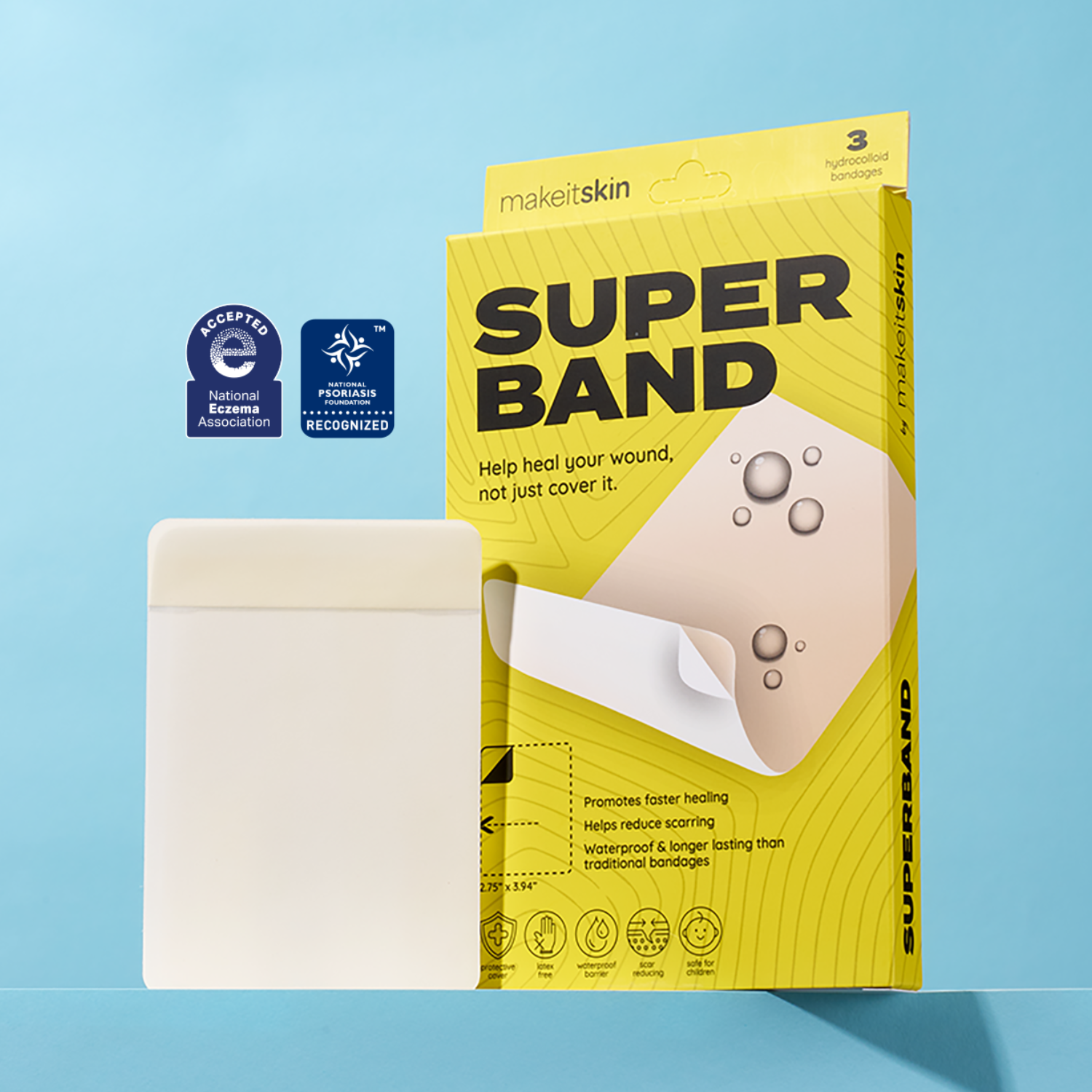
Buy SUPERBAND Cut-To-Size Hydrocolloid Bandage | Waterproof, Eczema-Safe
20.00 USD
Shop now


