
What Is Hypochlorous Acid? Cleaning Minor Wounds Gently
Hypochlorous acid (HOCl) is a mild oxidant that your own white blood cells make during the immune response. In dilute, pH-controlled solutions, it's used to cleanse skin and wounds without the sting people associate with alcohol, peroxide or iodine. We're MAKEITSKIN, the Dallas-based team behind SUPERBAND, and we make SUPERBAND Rescue Spray, a 200 ppm hypochlorous acid mist that helps keep minor cuts, scrapes, bug bites and irritated skin clean before you cover them.
Below: where HOCl comes from, why concentration and pH matter, what "200 ppm" means, how it's made and stored, how it compares with traditional antiseptics, what research on the molecule shows, and the spray, dry, patch routine we designed Rescue Spray around.
What is hypochlorous acid, and where does the body make it?
Neutrophils are the most abundant white blood cells recruited to sites of infection and inflammation. When they activate, they release an enzyme called myeloperoxidase (MPO), which uses hydrogen peroxide and chloride to produce hypochlorous acid, as Saint Louis University researchers explain in Frontiers in Immunology (2021). The same paper notes that HOCl plays a significant antimicrobial role in the body and can also harm host cells. In other words, amount matters.
A 2020 review in the Journal of Oral and Maxillofacial Surgery describes HOCl as an endogenous substance in all mammals, produced by neutrophils, eosinophils, mononuclear phagocytes and B lymphocytes in response to injury and infection. Hypochlorous acid occurs naturally in the body.
Why is hypochlorous acid gentle at low concentration and pH?
In water, HOCl can dissociate into a hydrogen ion and hypochlorite (OCl⁻). Which form dominates depends on pH. According to the Journal of Oral and Maxillofacial Surgery review, between pH 3 and 6 the predominant species is HOCl, and the solution's half-life gets longer as pH drops because there is less hypochlorite relative to HOCl.
Concentration is the other lever. Wound research on HOCl has used low concentrations. In a 2007 rat study of infected, chronic granulating wounds published in the Journal of Burns and Wounds, a stabilized HOCl solution at 0.01% and pH 3.5 to 4.0 controlled tissue bacterial load without inhibiting the wound healing process, which the authors contrasted with other antimicrobials they had investigated in that model. It is an animal result, not a human trial, but it shows why researchers focus on low-concentration, pH-controlled formulas.
Rescue Spray is our pH-balanced formula, and we designed it to cleanse without the burn of alcohol or the harshness of peroxide and iodine.
What does 200 ppm hypochlorous acid mean?
"Ppm" means parts per million. The 2020 review notes that 1 ppm equals 1 mg per liter, and that the ppm figure refers to the available free chlorine in the solution. So 200 ppm works out to:
- about 200 mg of available free chlorine per liter
- 0.02% by concentration (200 ÷ 1,000,000)
For context, the rat wound study above tested 0.01% (100 ppm) and 0.02% (200 ppm) groups. The same review also describes a clinical report in which patients' abdominal cavities were rinsed with 100 ppm HOCl and their wounds washed with 200 ppm, with no adverse effects observed. That places 200 ppm within the range researchers have studied; it does not make any single strength "the best."
Rescue Spray comes in a 2.7 fl oz bottle at 200 ppm and costs $19.
How is hypochlorous acid made?
HOCl is commonly made by electrolysis: passing an electric current through water with dissolved salt (sodium chloride). The Journal of Oral and Maxillofacial Surgery review describes an on-site system that combines non-iodized salt, water and electrolysis to produce solutions from 50 to 200 ppm. The review also recommends making HOCl with water that is as low as possible in organic and inorganic ions.
How long does hypochlorous acid last, and why does light matter?
HOCl is reactive, so it gradually breaks down. In a study cited in the 2020 review, chlorine levels in an HOCl solution exposed to sunlight began dropping on day 4, while a solution sheltered from sunlight held until after day 14. The review notes HOCl solutions are less stable with UV light, sunlight, air contact or temperatures above 25°C (77°F), and recommends cool, dark storage with minimal air contact.
Practical takeaways for any HOCl spray:
- Cap it tightly after each use.
- Keep it out of direct sun, so not on a car dashboard or sunny windowsill.
- Keep it away from heat.
Our label says the same thing: store Rescue Spray away from direct sunlight and heat.
Is hypochlorous acid better than alcohol or peroxide for cleaning a wound?
Start with what first-aid guidance recommends for minor cuts and scrapes: rinse with water and wash around the wound with soap. Mayo Clinic advises against hydrogen peroxide or iodine because both can irritate wounds. Stanford Medicine Children's Health says hydrogen peroxide and iodine harm living cells and should not be used directly on a wound. WebMD adds rubbing alcohol to the list, noting these stronger solutions aren't needed for minor cuts and scrapes and may irritate the wound.
So "better" depends on the job:
| Option | Role in minor wound care | What sources say |
|---|---|---|
| Clean running water, with mild soap around the wound | First step: flush out dirt and debris | Recommended first-aid approach (Mayo Clinic) |
| Hydrogen peroxide | Traditional antiseptic | Harms living cells; not for direct use on a wound (Stanford Medicine Children's Health) |
| Iodine | Traditional antiseptic | Can irritate wounds (Mayo Clinic) |
| Rubbing alcohol | Traditional antiseptic | Not needed for minor cuts; may irritate (WebMD) |
| Low-ppm, pH-controlled HOCl | Gentle cleansing mist | In an animal wound model it did not inhibit healing (Journal of Burns and Wounds) |
The short answer: HOCl doesn't replace rinsing away dirt. It fits as a gentler cleansing step than the harsh antiseptics first-aid sources steer people away from. That's why Rescue Spray is free of alcohol, peroxide, iodine, steroids and fragrance.
What does research say about hypochlorous acid for wound cleansing?
This research is about the molecule in clinical and laboratory settings, not about any home first-aid spray:
- Open wounds in surgical care. The 2020 review summarizes a report in which HOCl used as an irrigation solution with an ultrasonic system lowered wound bacterial counts compared with saline, and another in which surgical wounds were washed with 200 ppm HOCl with no adverse effects observed.
- Animal wound models. In the 2007 rat study, 0.01% HOCl at pH 3.5 to 4.0 reduced tissue bacterial load without slowing healing. The authors concluded it could have potential as a wound irrigation solution if its effective pH range can be maintained in clinical use.
These were professionally managed wounds and controlled experiments. Our spray's job is narrower: helping keep minor cuts, scrapes, bug bites and irritated skin clean.
Is hypochlorous acid a no-sting wound cleanser for sensitive skin?
For eczema-prone or reactive skin, the first question is usually "will this burn?" Research on the molecule here is small and early. In an investigator-blinded, randomized 72-hour study presented at Maui Derm (2018) by Berman and Nestor of the Center for Clinical and Cosmetic Research and the University of Miami Miller School of Medicine, 30 adults with atopic dermatitis were split into an HOCl solution group (20) and an untreated group (10). Itching decreased in 73.7% of the HOCl group versus 30.0% of the untreated group, and there were no treatment-related discontinuations or serious adverse events. The study was short and compared HOCl against no treatment, so it tells us the solution was tolerated in that group, not that it suits every person.
We made Rescue Spray for sensitive and eczema-prone skin and for every age in the family, with a no-sting formula that contains no alcohol, peroxide, iodine, steroids or fragrance. Skin still varies from person to person. If irritation shows up, stop using it, and ask a doctor if the area gets worse or doesn't improve.
What about hypochlorous acid and norovirus?
You may have seen HOCl mentioned alongside norovirus. That research is about hard surfaces. According to the 2020 review, 200 ppm HOCl decontaminated inert surfaces carrying noroviruses and other enteric viruses within a 1-minute contact time, and 20 ppm solutions did so on environmental surfaces within 10 minutes.
Those are surface results from test settings. They don't describe what a skin cleanser does on a person. Rescue Spray is a cleansing mist for minor skin care, not a surface or germ-protection product.
When should you skip home care and see a doctor?
Rescue Spray is for minor issues, and our label is clear about its limits:
- For external use only.
- Avoid contact with eyes.
- Do not use on deep or puncture wounds, serious burns or animal bites.
- Stop use and ask a doctor if the condition worsens or does not improve.
- Keep out of reach of children.
Stanford Medicine Children's Health advises seeing a doctor when a wound is deep and jagged, its edges gape open, you can't get the dirt out, it came from a human or animal bite, or bleeding doesn't stop after 10 minutes of firm, direct pressure. WebMD adds cuts that are 1/4 inch deep or more or show fat or muscle. Not sure about yours? Our guide on whether a cut needs stitches walks through the signs.
Where SUPERBAND Rescue Spray fits: spray, dry, patch
We built Rescue Spray as the step before the patch. Here are the directions from our label:
- Spray. Hold the bottle six inches from the skin and spray until the area is covered.
- Dry. Let it air dry or pat dry.
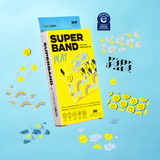
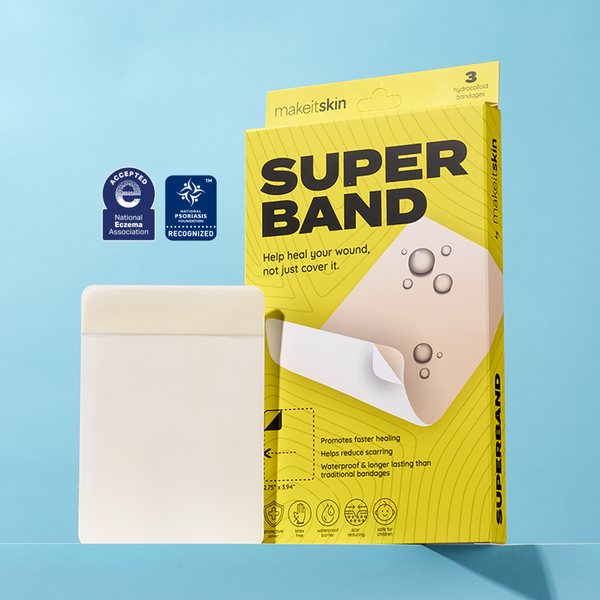
- Patch. Cover with a SUPERBAND hydrocolloid patch, and reapply the spray as needed through the day.
Don't skip the drying step: a hydrocolloid patch goes on best over dry skin, and once it's sealed it keeps the area covered and moist while skin recovers.
Pick the patch that matches the moment:
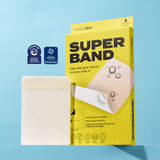
- Cut-To-Size flat sheets you trim to fit any scrape, minor burn or blister.
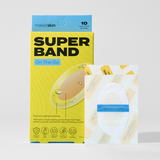
- On-The-Go pre-cut, pocket-ready patches for runs, the gym bag and travel.
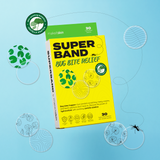
- Bug Bite Relief patches that cover bites so little hands can't scratch.
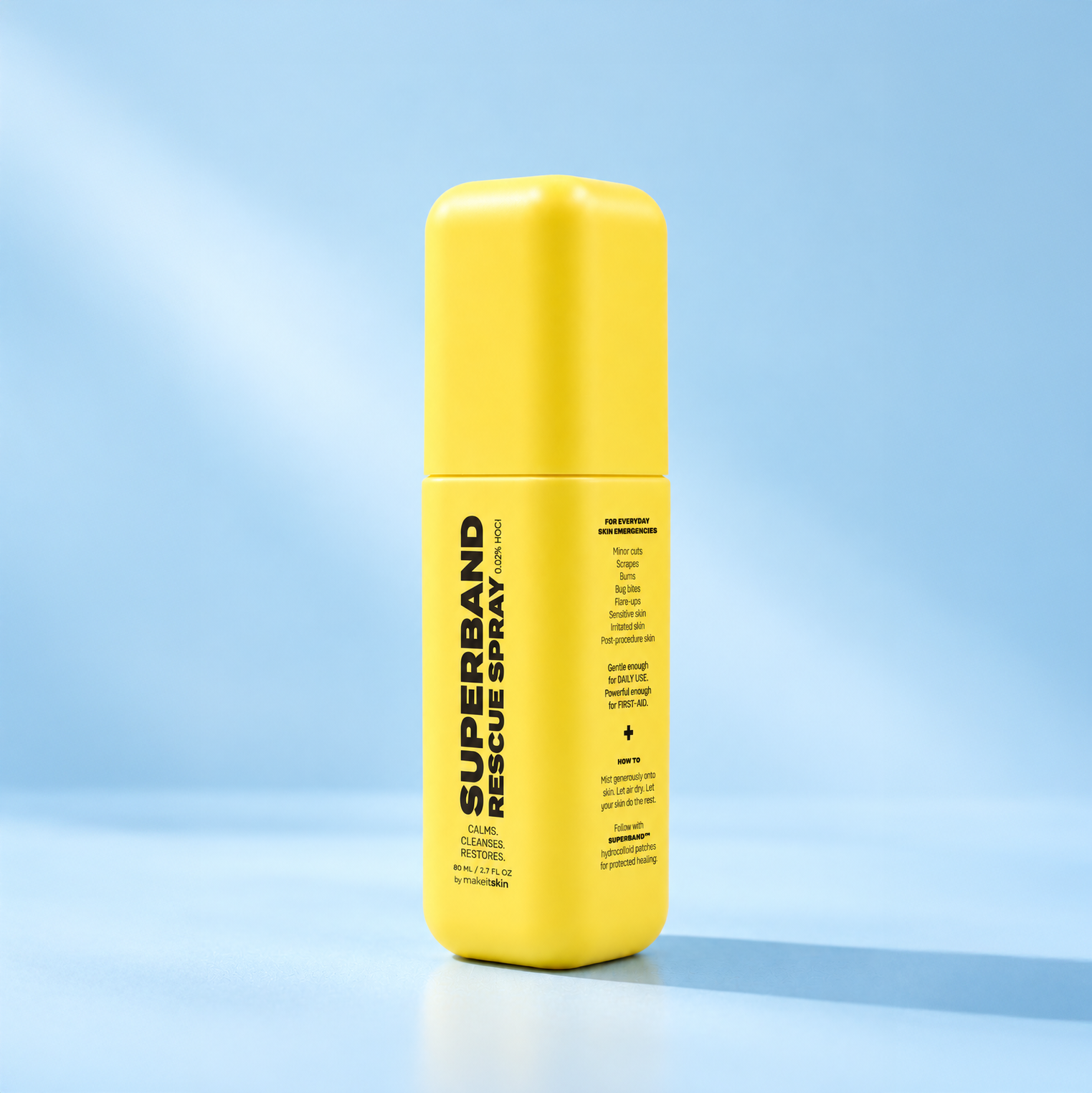
SUPERBAND Rescue Spray | Hypochlorous Acid First Aid Wound Spray
19.00 USD
Shop now
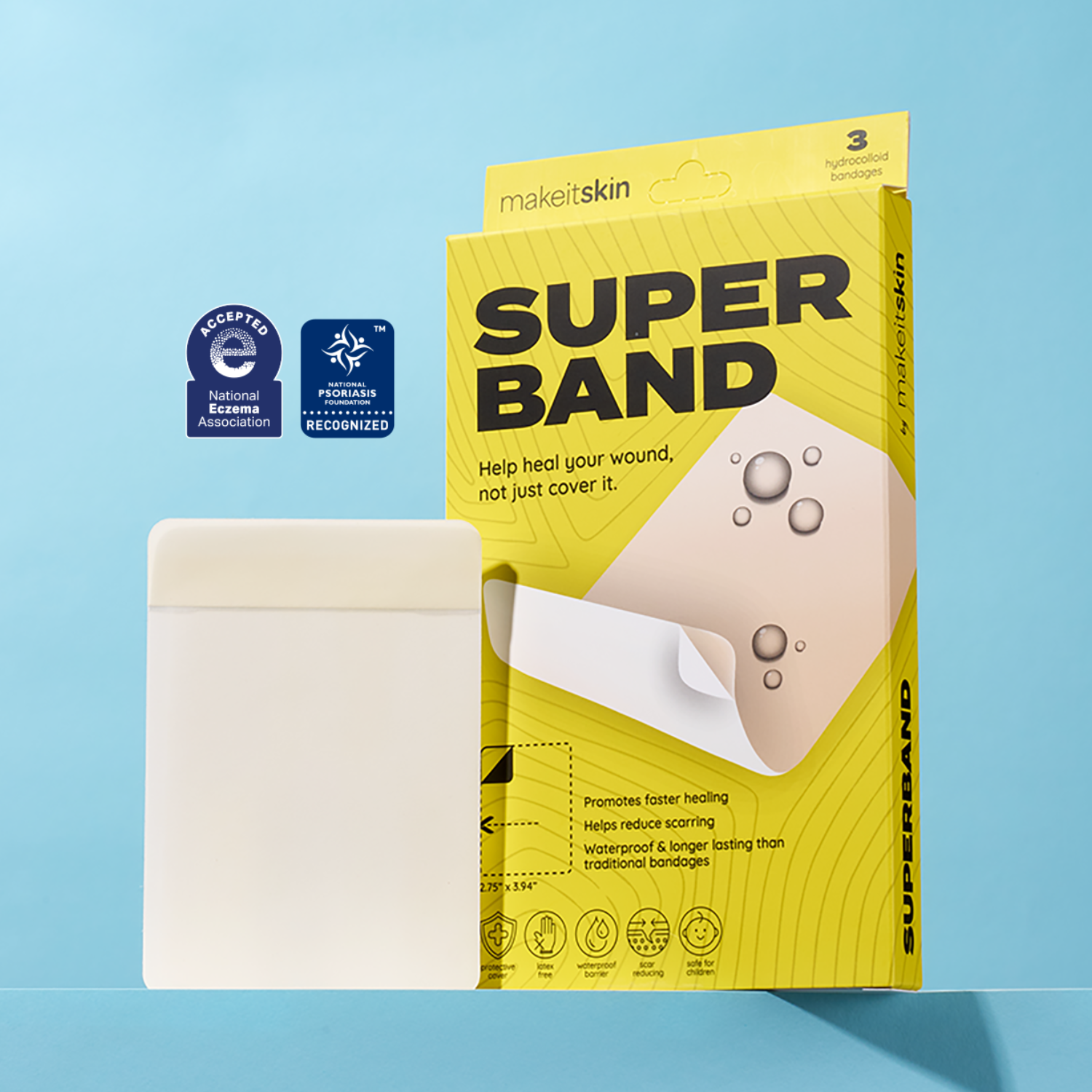
Buy SUPERBAND Cut-To-Size Hydrocolloid Bandage | Waterproof, Eczema-Safe
20.00 USD
Shop now
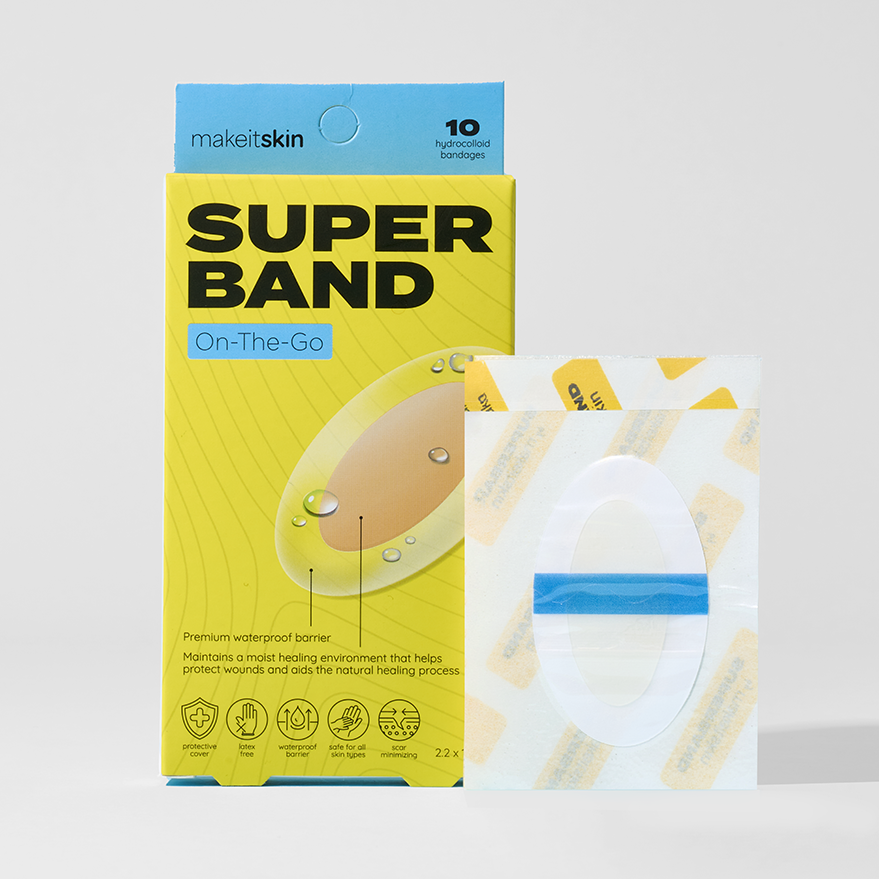
Buy SUPERBAND On-The-Go | Pre-Cut Waterproof Hydrocolloid Bandages (10-pack)
15.00 USD
Shop now
FAQ
Can kids use Rescue Spray?
Yes. We made Rescue Spray for every age in the family, with no fragrance, steroids or alcohol. Because the label says to keep the bottle out of reach of children and away from the eyes, an adult should do the spraying.
Can I use it each time I change my hydrocolloid bandage?
Our directions say to reapply as needed through the day. When you change a patch, spray the area, let it dry fully, then apply a fresh SUPERBAND patch. If the area isn't improving or gets worse, stop and check with a doctor.
Does hypochlorous acid go bad?
HOCl gradually breaks down, faster with sunlight, heat and air contact, according to the 2020 review. Keep the cap on and store the bottle away from direct sunlight and heat.
Ready to build a two-step kit? Start with SUPERBAND Rescue Spray and pair it with SUPERBAND Cut-To-Size for a patch you can trim to fit.


